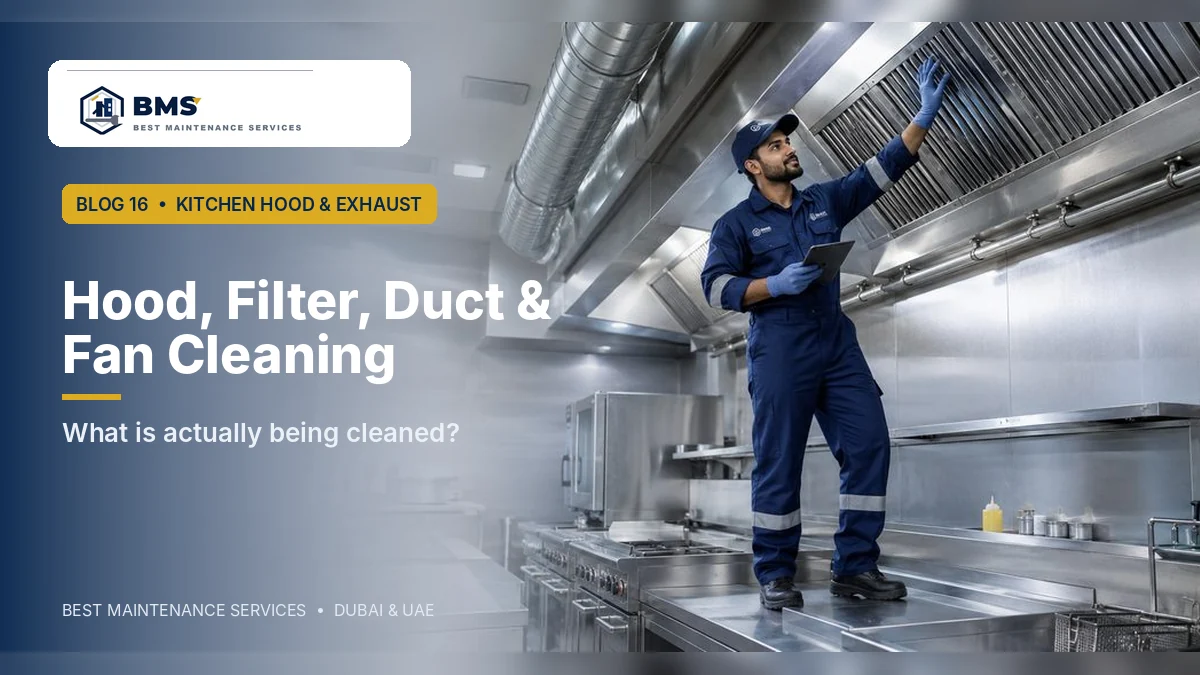
Kitchen hood cleaning can mean very different scopes. Learn the difference between filters, canopy surfaces, ducts and exhaust fans so Dubai commercial kitchens can specify the right work.
“Kitchen hood cleaning” is often used as if it describes one task, but a commercial extraction system has several very different parts. The visible canopy over the cooking line, removable grease filters, internal plenum, ductwork and exhaust fan all collect contamination in different ways and are accessed differently. A quotation that does not state which parts are included can leave the customer believing the entire system was cleaned when only the visible surfaces were addressed.
For a Dubai restaurant, hotel, café, bakery or cloud kitchen, defining the scope matters for hygiene, maintenance planning and fire-risk control. The right question is not simply “Do you clean kitchen hoods?” It is: Which components are being inspected and cleaned, how far does the work extend, and how will completion be verified?
1. The Hood or Canopy
The canopy is the visible stainless-steel structure above cooking equipment. Grease and cooking residue collect on accessible internal and external surfaces. Routine kitchen cleaning may wipe exposed surfaces, while specialist hood cleaning normally addresses heavier deposits in the canopy and accessible plenum area. A visually clean canopy does not prove that filters, ducts or the exhaust fan are clean. Each component needs its own inspection.
If you are unsure whether your kitchen extraction system needs more than surface cleaning, learn what is included in professional kitchen hood, duct and exhaust services in Dubai.
2. Grease Filters
Filters sit in the airflow path and are intended to capture a significant portion of grease before it reaches the duct. Depending on filter type and kitchen load, they may require frequent removal and cleaning. Damaged, incorrectly fitted or heavily blocked filters can allow more grease downstream and can also affect airflow.
- Record filter type and quantity.
- Check whether filters are damaged or missing.
- Clean using a method suitable for the filter material.
- Allow filters to dry and reinstall them correctly.
- Replace units that are no longer serviceable rather than repeatedly cleaning damaged filters.Grease that escapes the extraction system can also contribute to wider commercial kitchen maintenance problems, so regular grease control should be considered separately.
3. Plenum and Transition Areas
Behind the filters is a less visible area where grease can accumulate before air enters the main duct. This is often missed when a service only addresses the front of the hood. Access panels, geometry and equipment layout determine how thoroughly this zone can be reached.
The condition of the plenum can be an early indication of how much grease may have progressed into the ductwork.
4. Kitchen Exhaust Ductwork
Duct cleaning addresses deposits inside the ventilation route. The scope may include horizontal and vertical runs and requires suitable access. Long or complex systems cannot be meaningfully cleaned only from the hood opening, so inspection/access planning is important.
A proper scope should state what duct sections are included, where access is available, and any inaccessible sections requiring additional panels or planning. That transparency is more useful than a generic statement that “the duct was cleaned.”
For a clearer understanding of the inspection and cleaning process, see our guide to kitchen hood, duct and exhaust services in Dubai.
5. Exhaust Fan and Discharge Area
The exhaust fan moves air through the system and can accumulate grease on blades, housings and surrounding surfaces. Fan access may be at roof level or another external plant area. Safe access and isolation requirements can therefore be different from work inside the kitchen.
Inspecting the fan also gives useful information about deposits that have travelled through the duct. Heavy grease at the discharge end may indicate that filter and duct maintenance need attention.
How the Components Work Together
| Component | Primary maintenance question |
|---|---|
| Canopy/hood | Are accessible grease deposits removed? |
| Filters | Are they clean, intact and correctly fitted? |
| Plenum | Is grease building up behind the filter bank? |
| Duct | Are internal deposits controlled along the extraction route? |
| Exhaust fan | Are fan surfaces/airflow path clean and serviceable? |
| Discharge area | Is grease accumulating around the system outlet? |
Surface Kitchen Cleaning Is a Different Service
A kitchen deep clean can include degreasing visible equipment, floors, walls and accessible hood surfaces. That does not automatically include specialist internal ductwork. BMS separates these scopes so the customer knows whether they need general cleaning, hood/filter maintenance, full duct/exhaust work, or a combination.
Similarly, grease trap maintenance and drain cleaning address wastewater systems, not the air-extraction system. They are related to commercial kitchen grease control but should not be mixed into one vague service description.
How to Scope a Hood/Duct/Exhaust Cleaning Quote
- Kitchen type and cooking equipment.
- Number and approximate size of hoods.
- Filter quantity/type.
- Known duct route and access points.
- Exhaust fan location and access conditions.
- Operating hours and shutdown window.
- Last known cleaning/inspection date.
- Any airflow, odor, dripping grease or visible deposit concerns.
Verification After Cleaning
A professional handover should make the completed scope understandable. Before/after photographs of accessible areas, a list of components serviced, defects found and any inaccessible areas are useful. If filters, access panels or fan parts need replacement or repair, record them separately instead of treating the cleaning visit as complete by default.
The objective is not simply a shiny canopy. It is a controlled extraction system whose relevant components have been inspected and maintained according to the agreed scope.
Choosing the Right BMS Service Scope
If the visible hood is greasy but the duct condition is unknown, start with an inspection-led scope. If the duct and fan have a known service history and are due for cleaning, define the complete pathway in the quotation. If the issue is kitchen-wide grease on surfaces, add the appropriate cleaning scope separately.
BMS provides kitchen hood, duct and exhaust services in Dubai. Send hood photographs, filter details, fan location if known and the available shutdown window so the team can distinguish surface cleaning from a full extraction-system service.
Information to Prepare Before a Hood or Exhaust Visit
For kitchen hood cleaning Dubai, provide the kitchen type, cooking methods, operating hours, number of hoods, approximate hood dimensions, filter type, fan location if known, last specialist service date and the shutdown window available. Photographs of the canopy, filter bank and accessible fan or duct areas can help define whether the request is surface cleaning, filter maintenance, internal duct work, fan cleaning or a complete extraction-system inspection.
If the site has access restrictions, high-level roof equipment, permit requirements or a managed-building approval process, state that before attendance. These conditions can affect manpower, access equipment, isolation and the time required to complete the scope safely.
Document What Was Actually Cleaned
The final service record should list the components inspected and cleaned rather than using one generic phrase such as hood cleaning. It should identify filters, canopy/plenum, accessible duct sections, fan and discharge area where included, and should note any inaccessible sections or defects. Before-and-after photographs are particularly useful for hidden extraction components.
This component-level record helps the next maintenance decision. If grease returns quickly in one area, the facility manager can change the correct interval instead of increasing every cleaning task indiscriminately.
Coordinate With Kitchen Operations
Specialist extraction work can require equipment protection, isolation, access above ceilings or at roof level and a period when cooking is stopped. Planning the service around the kitchen schedule reduces disruption and gives technicians enough access to complete the agreed work rather than rushing only the visible surfaces.
For multi-system work, BMS can coordinate hood/exhaust and drainage scopes with grease-trap sizing, supply, installation or replacement planning. Routine grease-trap pumping, emptying and cleaning are not provided by BMS and remain a separate specialist scope.
For the cleaning side of commercial kitchen maintenance, see our kitchen deep cleaning guide for the areas that can be addressed beyond the extraction system.
Questions to Confirm Before Approving the Work
Before approving work related to kitchen hood cleaning Dubai, confirm the symptom or operational objective, what has already been tried, the exact scope included, any exclusions, the access or shutdown required, and how completion will be verified. This avoids a common maintenance problem where the customer and contractor use the same service name but expect different work.
For corrective work, ask what evidence supports the recommended action and what would change the recommendation. For planned maintenance, ask what condition will be checked at the next visit and how the interval should be adjusted if the system is loading faster or slower than expected. These questions turn the service from a one-off transaction into a controlled maintenance decision.
Property and Operations Context Matters
The same issue described in Kitchen Hood vs Filter vs Duct vs Exhaust Fan Cleaning: What Is Actually Being Cleaned? can have different consequences in a villa, apartment tower, restaurant, hotel or managed commercial site. Access permissions, occupied areas, service hours, equipment shutdown, noise, protection of finishes and coordination with building management can all affect the practical method even when the technical fault is similar.
Tell BMS about those constraints before attendance. A technically correct repair or cleaning method still needs to fit the property safely and with the least reasonable disruption. Where several trades are involved, each technical scope should remain separately documented even if the visit is coordinated.
Use the Result to Prevent Recurrence
After the immediate work is complete, record the root cause where it is known, the condition found, parts or areas serviced, and any prevention advice that is specific to the property. If the same symptom returns, compare it with the previous record instead of starting from assumptions.
Recurring maintenance records are valuable because they reflect real questions customers ask and help future service decisions. BMS can use anonymized recurring problem patterns, genuine project photographs and verified service experience to improve future guidance without inventing claims or copying generic advice.
Final approval should record the diagnosed condition, completed scope, verification result, responsible follow-up action and next review date so the maintenance history remains useful.
Where a fault has operational consequences, the customer should also record access limitations, shutdown time, photographs and any recommendation that was deferred. This helps the next visit begin with evidence instead of repeating the same checks.
For managed properties, assign the follow-up to a named person and confirm whether the issue is closed, being monitored or requires a separate quotation. Clear status prevents technical recommendations from being lost after the immediate symptom disappears.
The final service record should confirm the condition found, the scope completed, the test or observation used to verify the result, and any follow-up that remains the customer's responsibility.
Need a quote or technical guidance?
Share your emirate, property or business type, relevant photos, site access details and preferred timing. BMS will confirm the appropriate next step.
Frequently Asked Questions
Is cleaning the hood surface the same as duct cleaning?
No. Wiping the visible canopy removes accessible surface grease, while duct cleaning addresses grease deposits inside the ventilation pathway.
Do grease filters need separate cleaning?
Yes. Filters capture grease before air enters the duct and require routine cleaning or replacement according to their type and condition.
Why should the exhaust fan be inspected?
Grease can reach fan components and reduce cleanliness or performance. The fan is part of the extraction path and should be considered when defining a complete scope.