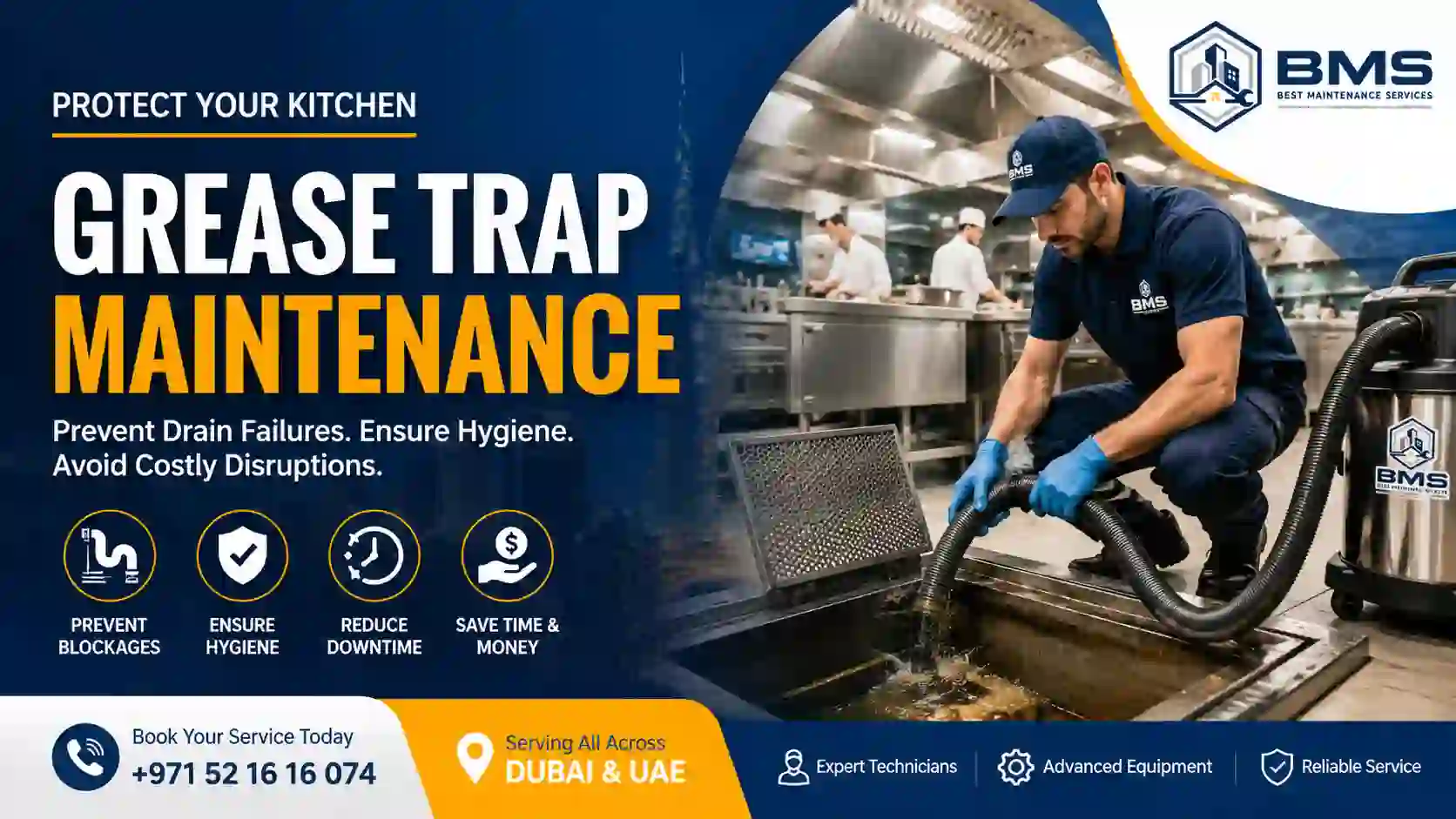
A practical guide to grease-trap maintenance responsibilities in Dubai commercial kitchens, including warning signs, FOG control and the difference between routine cleaning and equipment…
Running a commercial kitchen in Dubai means managing many moving parts. One of the most important yet often overlooked is grease trap maintenance. A properly maintained grease interceptor keeps your drainage system working smoothly, protects your plumbing, and helps your kitchen meet the hygiene standards set by Dubai Municipality every single day.
BMS grease-trap service scope: Best Maintenance Services supplies, sizes, installs and replaces grease traps for commercial kitchens. Routine grease-trap pumping, emptying and cleaning are not provided by BMS and should be arranged separately with an appropriate cleaning or waste-service provider. If grease has restricted the downstream drainage line, BMS Drain Cleaning can assess that separate drain problem.
When grease build-up is left unchecked, problems arrive fast. Slow drains, foul drain smells, and wastewater backup are the early warning signs. Over time, blocked drainage systems and grease trap overflow can bring your kitchen to a complete stop. Quick fixes are never enough FOG (fats, oils, and grease) requires proper professional removal to truly protect your system long-term.
Best Maintenance Services has helped restaurants, hotels, cafes, and food facilities across Dubai keep their kitchens clean and compliant for over five years. For grease-trap equipment, BMS focuses on correct sizing, supply, installation and replacement, with site guidance designed to help commercial kitchens choose a suitable system and maintain practical service access.
Service Areas: Best Maintenance Services (BMS) provides professional property maintenance, drainage and cleaning services alongside grease-trap sizing, supply, installation and replacement across Dubai. Our service areas include Dubai Marina, Downtown Dubai, Business Bay, Jumeirah, Palm Jumeirah, Al Barsha, Deira, Bur Dubai, Al Quoz, JLT, Dubai Silicon Oasis, Mirdif, and Dubai Hills Estate, serving residential, commercial, hospitality, and industrial clients with reliable and timely support.
Looking for a reliable grease management solution? Visit our Grease Trap Supply & Installation page to find the right system for your business.
Understanding the Role of a Grease Trap in Commercial Kitchens
How Grease Traps Separate Fats, Oils, and Grease
A grease trap also called a grease interceptor or FOG trap is a plumbing device installed in the drainage line of a commercial kitchen. Its job is simple but critical: it captures fats, oils, and grease before they reach the municipal sewer network. Wastewater flows in, heavier solids sink to the bottom, FOG floats to the top, and cleaner water passes through to the sewer. This process protects the wider drainage infrastructure from blockages.
Why Commercial Kitchens Generate Large Volumes of Grease Waste
High-volume kitchens produce enormous amounts of kitchen wastewater every day. Cooking oils, meat fats, sauces, dairy products, and food scraps all flow through kitchen sinks and dishwashing stations. Without a functioning grease recovery system, this waste enters wastewater pipes where it cools, hardens, and sticks to pipe walls. Over time, grease accumulation builds into a serious drainage problem that worsens with every service.
Common Facilities That Depend on Grease Traps
Many types of food businesses across Dubai rely on properly functioning grease traps, including:
- Restaurants and cafes
- Hotels and resorts
- Cloud kitchens and food delivery operations
- Catering companies and large-scale food production facilities
- Bakeries and food courts
- Hospital and school cafeterias
- Shopping mall food outlets
Planning a new grease management system? Read our guide on Grease Trap Installation Dubai to understand the right solution for your commercial kitchen.
What Happens When a Grease Trap Is Not Properly Maintained
Gradual Build-Up of Fats, Oils, and Grease
FOG management is a constant requirement in any active kitchen. Without regular grease trap cleaning, layers of fat, oil, and grease build up inside the trap over time. As the trap fills, it loses the ability to separate waste effectively. The overflow carries grease waste into your drain lines, coating pipe walls and narrowing the passage that wastewater needs to move through freely.
Restricted Wastewater Flow and Slow Drains
Once grease lines the inside of your drain pipes, wastewater flow slows noticeably. Slow drains in kitchen sinks, prep areas, and dishwashing stations are usually the first visible sign. Most businesses apply a quick fix at this point but that rarely solves the real problem. The grease remains, and it keeps building. Proper drain blockage prevention requires professional attention, not temporary patches.
Increased Pressure on Kitchen Plumbing Systems
A blocked drainage system forces wastewater to back up through the pipes. This creates pressure on your entire kitchen plumbing system including seals, joints, and pipe connections. Over time, this pressure can cause leaks and pipe damage. What starts as a minor clogged kitchen drain can turn into a costly plumbing repair involving sections of pipe beneath your kitchen floor.
The Risk of Unexpected Drainage Failures
The most serious consequence of neglecting grease trap upkeep is an unexpected drainage failure during service hours. When a grease trap overflow or full drain backup happens mid-service, it can force an immediate kitchen shutdown. This kind of operational disruption is expensive, stressful, and with the right preventive plan completely avoidable.
How Regular Maintenance Helps Prevent Drainage Problems
Keeping Drain Lines Clear and Functional
Scheduled grease interceptor cleaning removes fat, sludge, and debris from inside the trap before it can migrate into your drain lines. This keeps your kitchen drainage maintenance running efficiently and prevents the gradual pipe narrowing that leads to blockages. Clean drain lines mean faster wastewater flow and far fewer emergency callouts throughout the year.
Learn more about our Drain Cleaning Service in Dubai to keep commercial drainage systems operating efficiently and prevent recurring blockages.
Reducing the Likelihood of Emergency Blockages
The biggest benefit of a consistent routine maintenance schedule is predictability. When technicians service your trap on a set timetable, they catch problems early. A thin layer of grease is easy to remove. A fully blocked drain can cost thousands of dirhams in repairs and days of lost revenue. Emergency drain services are always more expensive than planned maintenance and far more stressful for your team and business.
Supporting Consistent Wastewater Flow
Proper grease waste management ensures that food service wastewater moves through your system without resistance. This matters especially in high-output kitchens where dozens or hundreds of meals are prepared daily. Improved drainage performance means your kitchen team focuses on food preparation not on calling a plumber in the middle of a busy shift.
Extending the Life of Drainage Infrastructure
Every time you service your grease trap, you are also protecting the pipes, seals, and connections around it. Commercial drainage systems that are cleaned regularly experience far less corrosion, fewer blockages, and a longer service life overall. Investing in drainage system maintenance today translates into significantly lower plumbing repair costs over the coming years.
The Connection Between Grease Trap Maintenance and Kitchen Hygiene
Reducing Unpleasant Odors
Bacteria feeding on decaying food waste trapped inside a neglected grease trap produce hydrogen sulfide gas the source of those unpleasant kitchen odors no cleaning spray can eliminate. Regular grease trap servicing removes the organic material fueling this bacterial activity, eliminating the smell at its source. A kitchen that smells clean is a kitchen that genuinely is clean.
Preventing Bacterial Growth Around Wastewater Systems
Foul drain smells are not just unpleasant they signal active bacterial contamination near your food preparation areas. This is a genuine hygiene risk. According to Dubai Municipality commercial kitchen hygiene requirements and UAE food safety regulations, food businesses must maintain clean, functional drainage at all times. Neglecting this creates both a compliance risk and a direct health risk for your staff and customers.
Creating a Cleaner Working Environment
Proper kitchen waste management extends beyond the grease trap itself. Clean floor drains, clear wastewater pipes, and functioning drain lines all contribute to a healthier environment for kitchen staff. When your drainage is maintained, there is less moisture pooling, less persistent odor, and a lower risk of slipping hazards from wastewater backing up onto kitchen floors.
For complete hygiene compliance, businesses can also benefit from professional kitchen deep cleaning services that support a safer and healthier food preparation environment.
Supporting Daily Sanitation Standards
Improved hygiene standards in a commercial kitchen begin with a functioning drainage system. When drains are clear and clean, your team can maintain their daily sanitation routines without fighting blocked sinks or overflowing floor drains. This directly supports consistent food safety practices critical for both staff wellbeing and customer confidence in your establishment.
How Preventive Maintenance Helps Avoid Business Disruptions
Minimizing Kitchen Downtime
A drain blockage during peak service hours is more than an inconvenience it can mean turning away customers, losing reservations, and damaging your reputation. Preventive maintenance eliminates most of these risks by keeping your drainage health in check throughout the year. You stay open. Your team stays productive. Your customers leave satisfied every time.
Preventing Unexpected Repair Costs
Emergency maintenance costs are almost always far higher than the cost of regular servicing. A grease trap cleaning visit costs a fraction of what a blocked sewer line or broken pipe will set you back. Reducing maintenance costs through planned servicing is one of the smartest financial decisions any kitchen operator can make and one of the easiest to implement with the right maintenance partner.
Supporting Smooth Day-to-Day Operations
When your drainage infrastructure functions reliably, every part of your kitchen runs more smoothly. Staff do not lose time dealing with drainage issues. Management avoids unexpected emergency callouts. Suppliers, customers, and inspectors see a well-run, professional facility. Operational efficiency improves across the board when foundational maintenance systems are properly in place.
Protecting Customer Experience and Business Reputation
Nothing damages a restaurant reputation faster than a visible hygiene issue. Whether it is a backed-up drain, a foul smell drifting from the kitchen, or a temporary closure due to a plumbing emergency, the impact on customer trust is immediate and lasting. Regular commercial grease trap maintenance protects your brand just as much as it protects your plumbing.
Common Warning Signs That a Grease Trap Needs Attention
Persistent Drain Odors
If there is a consistent foul smell coming from your kitchen drains even after regular cleaning your grease interceptor is most likely overdue for servicing. Persistent drain odors are caused by the breakdown of trapped organic matter, which produces gases that rise through drain lines and into your kitchen space. This is one of the clearest signs your system needs professional attention immediately.
Slow Drainage in Kitchen Fixtures
Slow drainage in sinks, floor drains, or dishwashing areas usually means grease and sludge have already begun narrowing the drain lines. Water pooling instead of draining quickly is never normal in a commercial kitchen. If multiple fixtures drain slowly at the same time, the issue is almost certainly deeper in the wastewater system not something that can be solved at the surface.
Frequent Drain Backups
Recurring drain blockages are a strong sign that your grease trap has exceeded its capacity, or that FOG has migrated into the drain lines beyond the trap. If you are calling a plumber more than once every few months for the same drain problem, the root cause needs addressing not just the symptom. Professional grease trap inspection will identify where the real issue lies.
Excessive Grease Accumulation
If you can visually see or smell grease pooling near drains, floor drain covers, or the trap access point, the trap is at or over capacity. Excessive grease accumulation at this stage means the system is no longer functioning as designed, and the risk of overflow is high. This requires immediate grease trap pumping to restore normal operation before further damage occurs.
If you are dealing with recurring blockages, learn more about the importance of a professional drain clean out and how it helps restore proper wastewater flow.
Quick Reference: Warning Signs and Recommended Actions
| Warning Sign | What It Means | Action Required |
|---|---|---|
| Foul odors from drains | Bacterial activity in trap | Schedule cleaning immediately |
| Slow draining sinks | FOG narrowing drain lines | Inspect and service trap |
| Water backing up | Trap at or over capacity | Emergency service required |
| Visible grease near drains | Overflow risk is high | Grease trap pumping needed |
| Gurgling drain sounds | Blockage deeper in system | Professional inspection required |
Best Practices for Maintaining a Commercial Grease Trap
Establishing a Routine Maintenance Schedule
The most effective way to avoid drainage problems is to set a consistent routine maintenance schedule before a problem occurs. Depending on your kitchen output, grease trap cleaning may be required every four to eight weeks. High-volume kitchens particularly hotels, catering facilities, and large restaurants in areas like Downtown Dubai, Dubai Marina, and Business Bay may need more frequent grease trap servicing to manage their daily load.
Monitoring Grease Accumulation Levels
Many grease trap maintenance professionals apply the "25% rule": if the combined depth of grease and sludge reaches 25% of the trap's total liquid capacity, it should be cleaned immediately. Keeping records of accumulation levels during each service visit helps predict how quickly your trap fills, allowing you to optimize your maintenance schedule based on real operational data rather than guesswork.
Keeping Maintenance Records
Keeping maintenance records is not just good practice it may be required by Dubai Municipality during facility inspections. Records should include the service date, trap condition, volume of waste removed, and any technician recommendations. These records also help identify patterns such as a trap filling faster than expected which could indicate a change in kitchen output or equipment behavior that needs to be addressed.
Working With Qualified Service Professionals
Not all routine grease-trap cleaning are equal. Look for a company with trained technicians, proper grease waste disposal procedures, and genuine experience working in commercial kitchens. A qualified drainage maintenance company will not only clean the trap but also inspect it for damage, check all connections, and advise you on the best servicing frequency for your specific kitchen operation.
Why Maintenance Requirements Vary Between Different Kitchen Operations
Restaurants and Cafes
Restaurant grease trap maintenance frequency depends heavily on daily cover counts and menu type. A busy restaurant serving fried or fatty foods needs more frequent servicing than a lighter cafe. Many Dubai restaurants particularly in high-traffic areas like Downtown Dubai, Business Bay, and JLT operate at very high volumes, making monthly or bi-monthly servicing a practical necessity rather than an option.
Hotels and Hospitality Facilities
Hotel grease trap maintenance involves managing multiple kitchen outlets from main restaurants and room service kitchens to banquet facilities and staff cafeterias. Each outlet may have its own drainage requirements and trap capacity. Given the scale of hospitality operations, preventive maintenance plans with regular scheduled visits are usually the most practical and cost-effective approach available.
Cloud Kitchens and Food Delivery Operations
Cloud kitchens operate at high intensity with multiple food brands running from a single cooking space. This concentrated output accelerates grease accumulation significantly. Despite having no dine-in service, their grease interceptor maintenance needs are just as demanding as a traditional restaurant and in many cases more so, given the volume of meals prepared per shift.
Catering and Large-Scale Food Production Facilities
Catering businesses and food production facilities often prepare hundreds or thousands of meals in a single shift. The volume of food service wastewater and FOG they generate is substantially higher than a standard restaurant. These operations typically require the most frequent routine grease-trap pumping and benefit most from dedicated long-term drainage maintenance contracts designed around their specific production schedules.
Choosing the right equipment matters just as much as maintenance. Explore our guide to Grease Trap Supply Dubai for commercial kitchen grease management solutions.
The Value of Professional Grease-Trap Maintenance Planning
Thorough Inspection and Cleaning Procedures
A Grease Trap Supply & Installation Services goes well beyond simply pumping out the contents. A skilled technician will inspect the trap body for cracks or corrosion, check inlet and outlet baffles, clean the interior walls, rinse all components thoroughly, and confirm the system is functioning correctly before completing the visit. This thorough process ensures your trap performs effectively until the next scheduled service call.
Identifying Problems Before They Escalate
One of the most valuable benefits of working with professional grease trap specialists is early problem detection. Small cracks, deteriorating seals, or a slightly misaligned baffle may seem minor but left unaddressed, they lead to much bigger failures. Catching these issues early means a simple repair rather than a full drainage system replacement and weeks of business disruption.
Supporting Long-Term Drainage Performance
Long-term system reliability is the goal of every well-designed maintenance programme. A well-maintained grease trap protects not just itself, but the entire commercial drainage system connected to it. Pipes stay clearer. Connections remain sealed. Drain performance stays consistent over time. The cumulative effect of regular servicing is a drainage system that works without surprise failures year after year.
Helping Businesses Maintain Operational Efficiency
When you know your drainage is being cared for by professionals on a set schedule, you remove one major source of operational uncertainty from your business. Kitchen managers can focus on food quality and service. Facility managers can plan maintenance budgets accurately. This is the real value of a professional commercial kitchen maintenance partnership predictability and peace of mind you can rely on.
Choosing a Reliable Grease Trap Maintenance Partner in Dubai
Experience With Commercial Kitchen Drainage Systems
Choose a company with proven experience in commercial grease trap maintenance across different kitchen types. Ask how long they have been operating, what types of food facilities they service, and whether they are familiar with Dubai Municipality requirements for commercial kitchen drainage. Genuine experience with diverse operations from fine dining restaurants to industrial catering facilities is a strong indicator of real expertise.
Responsive Service and Preventive Support
A reliable drainage maintenance company should offer both scheduled preventive visits and a prompt response when urgent problems arise. Emergency drain cleaning services are an essential part of any complete maintenance offering. Knowing that your partner can respond quickly to a drainage crisis not just arrive on a calendar date makes a real difference when problems happen unexpectedly at the worst possible time.
Industry Knowledge and Technical Expertise
Look for technicians who genuinely understand FOG management, wastewater management practices, and the specific demands of high-volume commercial kitchens. Real technical expertise matters when diagnosing complex drainage problems or recommending the right servicing frequency for your specific operation. Ask about their equipment, their waste disposal procedures, and how they conduct each inspection.
Why Businesses Across Dubai Trust Best Maintenance Services
For grease-trap supply and installation in Dubai, Best Maintenance Services focuses on sizing, equipment selection, installation access and replacement planning for commercial kitchens. Restaurants in JLT, cafes in Al Barsha, hotels in Palm Jumeirah, and cloud kitchens in Dubai Silicon Oasis all trust us for the same reasons consistent quality, honest pricing, and a team that genuinely understands what commercial kitchen operations demand.
Our Service Commitment to Your Business
| What We Offer | How It Helps You |
|---|---|
| 5+ years of industry experience | Proven knowledge of Dubai commercial kitchen drainage |
| 500+ satisfied customers | Track record of reliable, high-quality service |
| 200+ completed maintenance projects | Experience across diverse kitchen types and scales |
| Trained and experienced technicians | Accurate inspection and effective maintenance every visit |
| Advanced drain cleaning equipment | Faster, more thorough results with every service |
| Safe and hygienic maintenance methods | Fully compliant with UAE food safety standards |
| Proper grease waste disposal | Environmentally responsible, aligned with Dubai regulations |
| Transparent AED pricing | No surprises clear quotes before work begins |
| Preventive maintenance plans | Scheduled servicing tailored to your kitchen output |
| Fast response across all Dubai areas | Available when you need us most |
Our team understands the pressure commercial kitchens operate under every day. We work around your schedule, complete our work efficiently, and leave every kitchen cleaner than we found it. For BMS supply, installation or replacement enquiries, the team reviews the grease-trap unit, site access, connections and capacity so recommendations are tied to the actual equipment requirement.
Frequently Asked Questions About Grease Trap Maintenance
How often should a commercial grease trap be maintained?
Most commercial kitchens in Dubai should have their grease trap cleaned every four to eight weeks. High-volume operations such as hotels, large restaurants, and catering facilities may need monthly or bi-monthly servicing. The best way to determine the right frequency is to have a qualified technician assess your trap's fill rate based on your specific kitchen output and menu type. This gives you a schedule built on real data.
What are the risks of delaying grease trap maintenance?
Delaying grease trap upkeep leads to a predictable chain of problems: increased grease accumulation, slow drains, wastewater backup, and eventually a full drainage failure. Beyond the operational disruption, delayed maintenance can result in significant plumbing repair costs, regulatory non-compliance with Dubai Municipality standards, and reputational damage if the issue forces a temporary closure or affects the customer experience.
Can poor grease trap maintenance cause drain blockages?
Yes. When a grease trap is not serviced regularly, FOG spills into the drain lines beyond the trap. As this grease cools and solidifies on pipe walls, it restricts wastewater flow and eventually causes a full drain blockage. Recurring drain blockages in a commercial kitchen are one of the most predictable consequences of inadequate grease interceptor maintenance and one of the easiest to avoid with a proper schedule.
How does maintenance improve kitchen hygiene?
A clean grease trap removes the decaying organic matter that produces foul drain smells and supports bacterial growth near food preparation areas. Keeping the trap clean and drainage flowing properly eliminates a major source of kitchen contamination and odor. This directly improves your working environment, supports your team's health, and helps you remain compliant with UAE food safety regulations at all times.
Is professional maintenance necessary for commercial kitchens?
Yes. Professional routine grease-trap cleaning go well beyond what a kitchen team can manage in-house. Trained technicians have the equipment, expertise, and proper grease waste disposal procedures to service a trap safely and thoroughly. They also inspect for problems not visible from the surface. For commercial kitchens in Dubai, professional servicing is both a practical necessity and, in many cases, a regulatory requirement under Dubai Municipality guidelines for food facility operators.
Keep Your Kitchen Operating at Its Best
Grease trap maintenance is not a luxury it is a core part of running a safe, efficient, and compliant commercial kitchen in Dubai. When maintained properly, your drainage system protects your kitchen operations, your staff, your customers, and your business from a wide range of preventable problems that can otherwise lead to costly disruptions.
Ignoring your grease trap leads to blocked drains, foul odors, expensive emergency repairs, and potential regulatory issues. Maintaining it properly means smooth operations, lower costs, better hygiene, and long-term drainage infrastructure reliability that supports your business every single day of the year.
The right approach is proactive. Set a maintenance schedule. Work with qualified professionals who understand your specific operation. Stay ahead of problems rather than reacting to them after the damage is done.
Best Maintenance Services supports commercial kitchens with grease-trap sizing, supply, installation and replacement, while BMS Drain Cleaning handles separate downstream drainage problems where required. Let our team help your kitchen run cleaner, safer, and more efficiently every day.
Need Grease Trap Supply, Installation or Replacement in Dubai?
Contact Best Maintenance Services for grease-trap sizing, supply, installation or replacement. Routine trap pumping and cleaning should be booked separately with an appropriate waste-service provider.
Need a quote or technical guidance?
Share your emirate, property or business type, relevant photos, site access details and preferred timing. BMS will confirm the appropriate next step.