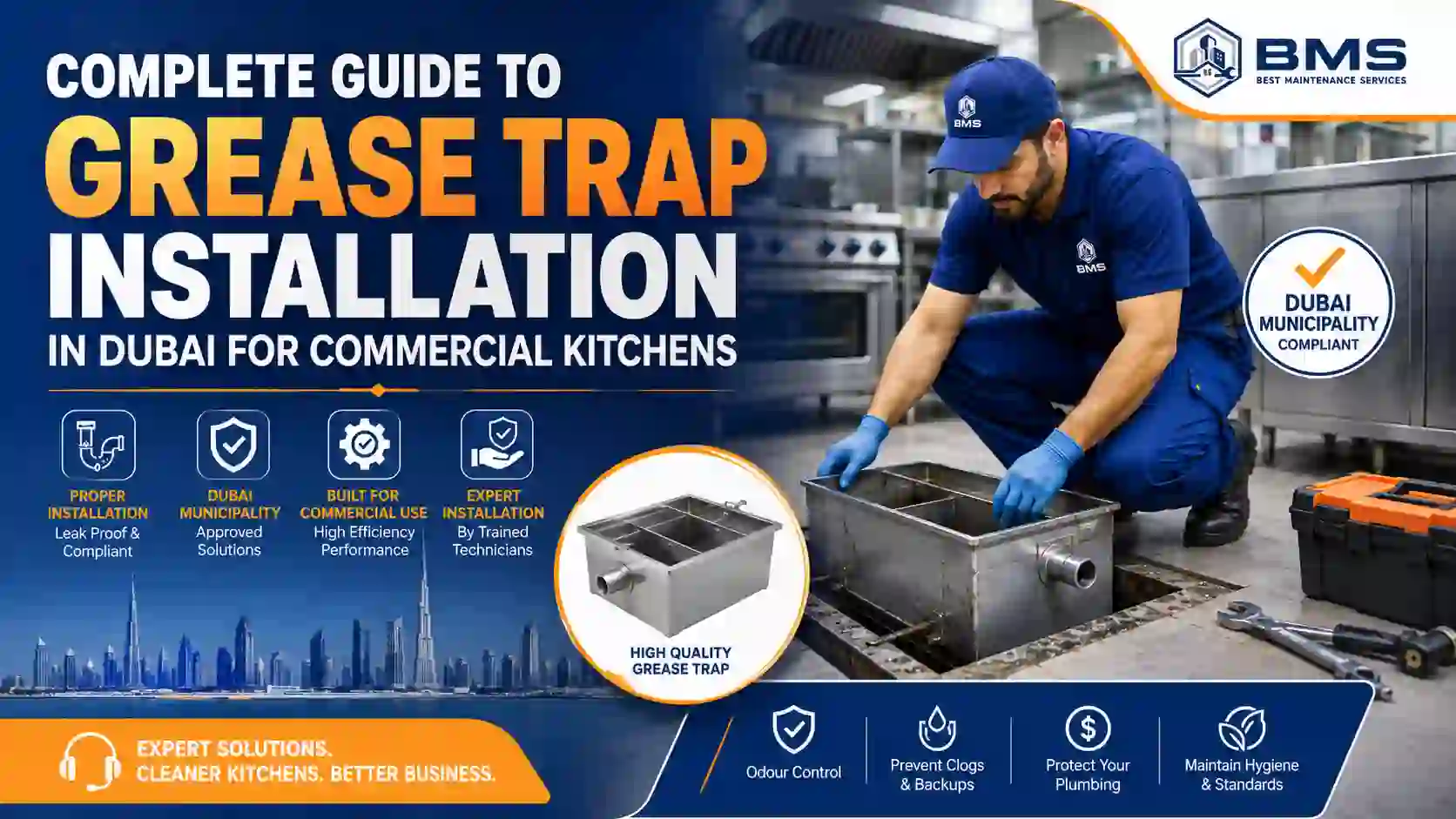
Discover everything about grease trap installation in Dubai, from choosing the right system and understanding regulations to installation costs, maintenance schedules, and expert tips…
If you run a commercial kitchen in Dubai, you already know how much grease, oil, and food waste your kitchen produces every single day. Without the right system to manage it, all that waste ends up in your drains—causing blockages, bad smells, and expensive plumbing problems. A properly installed grease trap is one of the smartest investments any food business can make.
Grease trap installation in Dubai is not just a technical requirement—it is a legal one. Dubai Municipality requires commercial kitchens to have approved FOG (fats, oils, and grease) management systems in place to protect the city's sewer network and wastewater treatment infrastructure. Ignoring this requirement can lead to fines, forced shutdowns, and serious plumbing emergencies.
This complete guide covers everything you need to know—from how grease traps work and choosing the right size, to the full grease trap installation process, recommended maintenance schedules, and real installation costs in AED. Whether you own a restaurant, hotel, cloud kitchen, or catering facility, this guide will help you make the right decision for your business.
Need expert help right away? Explore our Grease Trap Supply & Installation Services designed for every type of commercial kitchen across the UAE.
What Is a Grease Trap and How Does It Work?
Understanding the Purpose of a Grease Trap
A grease trap—also known as a grease interceptor or grease separator—is a plumbing device designed to capture fats, oils, and grease (FOG) before they enter the main drainage system. It sits between your kitchen sinks and the sewer network, acting as a filter for greasy wastewater. Without it, FOG hardens inside pipes and causes serious drain blockages that shut kitchens down.
How Grease, Oil, and Food Waste Are Separated
When warm, greasy water flows from your kitchen into the grease trap chamber, it slows down inside the unit. Because oil and fat are lighter than water, they rise to the surface. Solid food waste particles sink to the bottom as sludge. Clean water—called effluent—flows out through the outlet pipe into the drainage infrastructure. This natural grease retention process protects your entire plumbing network from FOG damage.
Why Grease Traps Are Essential for Commercial Kitchens
Commercial kitchens produce enormous volumes of grease and food waste every day. Without a grease removal system, that grease accumulates inside pipes, causing slow drainage, drain overflow, and foul smells. Regular grease accumulation can also damage your entire kitchen plumbing system, leading to emergency repairs that cost far more than proper prevention. A correctly installed grease collection unit prevents all of this before it starts.
Why Grease Trap Installation Matters for Businesses in Dubai
Preventing Drain Blockages and Plumbing Problems
Grease accumulation is one of the most common causes of blocked drains in commercial kitchens. When FOG enters your pipes without being intercepted, it cools and hardens, gradually narrowing the pipe until water can no longer flow freely. This results in drain backups, wastewater overflow, and expensive emergency plumbing service calls. A correctly installed grease interceptor stops this problem before it starts.
Supporting Kitchen Hygiene and Food Safety
Blocked and overflowing drains are a serious hygiene risk in any kitchen. Standing water and decomposing food waste create the perfect environment for bacteria to grow, compromising your food safety standards. Dubai Municipality commercial kitchen hygiene requirements mandate proper wastewater management to maintain a safe and compliant kitchen environment for both staff and customers.
Protecting the Environment from FOG Waste
When fats, oils, and grease enter the main sewer system, they don't just cause plumbing emergencies—they damage the city's wastewater treatment facilities and harm the environment. UAE regulations are strict about FOG management to prevent contamination of the public drainage infrastructure. Installing a grease separator is both a legal and an environmental responsibility for every food business.
Meeting Local Regulations and Compliance Requirements
Dubai Municipality requires all commercial food businesses to have an approved grease trap system installed before opening. Failure to comply can result in operational fines, penalties, and forced closure. Working with a professional grease trap installation company in Dubai ensures your system meets all local codes and UAE food safety regulatory standards, protecting your business and your reputation.
For expert help with Drain Cleaning Services Dubai and Commercial Kitchen Drainage compliance, contact the specialists at Best Maintenance Services.
Which Businesses Need a Grease Trap?
Restaurants and Cafés
Any food business that cooks, fries, or prepares food needs a grease trap. Restaurants and cafés generate high volumes of cooking oil, food scraps, and greasy water daily. A properly sized kitchen grease trap protects their drainage system and keeps operations running without costly interruptions.
Hotels and Resorts
Large hotels and resorts often operate multiple kitchens, banqueting facilities, and room service stations simultaneously. Each generates significant FOG waste. A high-capacity commercial grease trap installation is essential for these properties to meet Dubai Municipality hygiene standards and protect their commercial plumbing infrastructure.
Cloud Kitchens and Catering Facilities
Cloud kitchens and catering companies operate with high production volumes in compact spaces, often running multiple brands from a single location. They require well-planned grease interceptor installation to handle the constant flow of kitchen wastewater. Proper FOG management is critical to maintain food safety certifications and avoid service disruptions.
Bakeries and Food Processing Units
Bakeries and food production facilities work with fats, dairy products, and cooking oils that can quickly clog drainage systems. A grease trap system suited to their specific output helps prevent expensive drain blockages and supports clean kitchen operations throughout the day.
Shopping Malls and Food Courts
Food courts and shopping malls with multiple food vendors need a centrally managed or individual grease trap solution. High daily footfall and multiple active commercial kitchens mean large volumes of greasy wastewater flow constantly. Effective FOG management is essential for maintaining a functional and fully compliant drainage network across the entire property.
Different Types of Grease Traps
Above-Ground Grease Traps
Above-ground grease traps are typically installed under kitchen sinks or on countertops. They are easy to access and maintain, making them popular in smaller commercial kitchens. However, they require more frequent grease trap cleaning because of their smaller grease trap capacity. They are ideal for cafés, coffee shops, and compact cloud kitchens.
Underground Grease Traps
Underground grease traps are buried beneath the kitchen floor or installed outside the building. They have a much larger grease trap capacity, making them suitable for high-volume operations like hotels, busy restaurants, and central kitchens. These units require less frequent cleaning but need a properly fitted grease trap manhole cover for safe access during servicing.
Stainless Steel Grease Traps
Stainless steel grease traps are highly durable, corrosion-resistant, and easy to sanitise. They are the preferred choice for most professional kitchens because they meet UAE food safety hygiene standards and withstand the demanding conditions of a busy commercial kitchen. Their robust build ensures a long service life, often lasting 15 to 20+ years with proper maintenance.
Polyethylene Grease Traps
Polyethylene grease traps are lightweight, affordable, and resistant to kitchen chemicals. They are commonly used for underground grease trap installations because they are easy to transport and install without heavy machinery. While not as heavy-duty as stainless steel, they perform reliably when maintained on schedule and can last 10 to 15 years.
Small Grease Traps for Compact Kitchens
A small grease trap is the right solution for compact operations like bakeries, coffee shops, or small cafés. These units fit easily under sinks and keep kitchen plumbing protected without consuming valuable space. Even small food businesses benefit significantly from proper FOG management through a correctly sized grease filtration system.
How to Choose the Right Grease Trap for Your Kitchen
Choosing the right grease trap is not a guessing game. It requires a careful evaluation of your kitchen's specific needs, output volume, and long-term plans.
Kitchen Size and Daily Operations
A larger kitchen with more cooking stations produces more FOG waste each day. The bigger your operation, the higher the grease trap capacity you will need. Your grease trap sizing must match your daily output to prevent overflow and reduce the frequency of expensive cleaning visits.
Number of Sinks and Kitchen Equipment
Every sink, dishwasher, and cooking station connected to your drainage system adds to the total grease load. Count all connected appliances when calculating the required grease trap size. A professional plumbing inspection provides the most accurate assessment and prevents costly mistakes.
Water Flow Rate
Grease trap sizing in the industry is calculated based on water flow rate—typically measured in litres per minute. Your plumbing team calculates the peak flow rate from all connected kitchen equipment and selects the right grease trap capacity accordingly. Under sizing causes grease buildup and overflow; oversizing wastes your budget.
Grease Production Levels
Different food businesses produce very different amounts of fats, oils, and grease. A fried food restaurant produces far more FOG than a bakery or café. Your menu and cooking methods directly influence the correct grease trap design and the recommended grease trap maintenance schedule.
Future Business Growth
If you plan to expand your kitchen operations in the coming years, factor that into your grease trap installation now. Installing a slightly larger unit from the start saves the cost of grease trap replacement later. A professional grease trap installation contractor can advise you on the most cost-effective long-term grease management solution for your business.
For a full range of Grease Trap Supply Services in Dubai, contact Best Maintenance Services for a free site assessment and sizing recommendation.
Step-by-Step Grease Trap Installation Process
Professional grease trap installation follows a clear, structured process to ensure the system works correctly and compliantly from day one.
| Step | Action | What Happens |
| Step 1 | Site Inspection & Planning | Qualified technician assesses plumbing layout, drainage, and space to create a compliant installation plan. |
| Step 2 | Location Selection | Grease trap is positioned between kitchen drainage outlets and the main sewer—accessible for future maintenance. |
| Step 3 | Plumbing Connection Prep | Existing pipework is modified with correct pipe diameter, slope, and fittings for smooth water flow. |
| Step 4 | Unit Installation | Grease trap is secured in place—above-ground or underground—with all connections made tight and leak-free. |
| Step 5 | System Testing | Controlled water flow test checks for leaks, grease retention performance, and correct wastewater discharge. |
| Step 6 | Final Inspection | Full compliance check with documentation provided for Dubai Municipality audit purposes. |
Site Inspection and Planning
Before anything begins, a qualified technician visits your kitchen to assess the plumbing network, drainage layout, and available installation space. This plumbing inspection identifies the best placement for the grease interceptor and ensures the installation plan meets all Dubai Municipality requirements before any work starts.
Selecting the Best Installation Location
The grease trap must be positioned between the kitchen's drainage outlets and the main sewer connection. The location must be accessible for grease trap cleaning and inspection without disrupting daily kitchen operations. Underground units are positioned to allow easy access through a properly sized grease trap manhole cover.
Preparing the Plumbing Connection
The existing kitchen plumbing is modified to connect to the new grease trap system. Inlet and outlet pipes are measured, cut, and fitted to the unit's exact specifications. Correct pipe diameter and gradient are essential to ensure smooth water flow through the entire drainage system.
Installing the Grease Trap
The unit is positioned in the approved location—either above ground or underground. It is secured firmly in place, and all plumbing connections are made tight and completely leak-free. The grease trap tank is checked for correct alignment and structural integrity before any water flows through it.
Testing the System
Once installed, the system is tested with a controlled water flow to verify there are no leaks, that grease retention is working correctly, and that wastewater discharge flows properly into the sewer network. Any adjustments are made on-site before the kitchen resumes full operation.
Final Inspection Before Use
A final grease trap inspection confirms the system is fully functional, correctly installed, and compliant with local regulations. Full documentation is provided to support Dubai Municipality compliance audits and as a record for future maintenance visits.
Common Mistakes to Avoid During Installation
Even minor mistakes during grease trap installation can lead to serious and expensive problems down the line. Here are the five most common ones to avoid.
Choosing the Wrong Size
Installing a grease trap that is too small for your kitchen's output is the most common mistake. An undersized unit fills up too quickly, leading to grease buildup, drain blockage, and eventual overflow. Always use a professional grease trap sizing guide and site assessment before purchasing any unit.
Incorrect Placement
Placing the grease interceptor too far from kitchen equipment or at the wrong elevation reduces its effectiveness and can cause drainage system problems. Poor placement also makes access for grease trap cleaning difficult and costly. Always follow the manufacturer's guidelines and local authority requirements.
Poor Pipe Connections
Loose or incorrectly connected pipes lead to wastewater leaks, persistent odors, and reduced drainage efficiency. All connections must be watertight and properly sealed with the correct fittings. Poor kitchen plumbing workmanship at this stage creates recurring problems that increase your maintenance costs.
Ignoring Maintenance Access
Some businesses install underground grease traps without adequate manhole cover access, making cleaning and inspection almost impossible without significant excavation. Always plan for clear, convenient maintenance access from day one—it saves substantial time and money over the unit's entire service life.
Delaying Professional Installation
Some business owners delay or skip professional installation to cut costs. This often leads to non-compliance with Dubai Municipality regulations, system failures, and costly emergency plumbing service calls. Hiring an experienced grease trap installation company in Dubai from the start is always the smarter, more cost-effective investment.
Understanding Grease Trap Manhole Covers
Why Manhole Covers Matter
A grease trap manhole cover provides the only access point to an underground grease trap for routine inspection, cleaning, and maintenance. Without a properly fitted cover, technicians cannot service the unit efficiently, which increases both the time and cost of every maintenance visit—and raises the risk of missed servicing intervals.
Choosing Durable Materials
Grease trap covers must handle foot traffic, exposure to kitchen chemicals, outdoor weather conditions, and vehicle loads in some locations. Stainless steel and reinforced composite covers are the most commonly used and most durable options in Dubai's commercial kitchen environments. Choose covers rated for your specific load requirements.
Inspection and Maintenance Access
The grease trap manhole cover must be correctly sized for the grease trap chamber below and easy to remove safely. Covers that are too heavy, corroded, or poorly fitted make routine grease trap maintenance harder than it needs to be. They also increase the risk of spills and safety hazards during servicing.
How Much Does Grease Trap Installation Cost in Dubai?
The cost of grease trap installation in Dubai depends on several factors. Here is an honest breakdown in AED to help you plan your budget effectively.
| Installation Type | Estimated Cost (AED) |
| Small above-ground unit (café, small kitchen) | AED 800 – 1,500 |
| Medium commercial unit (restaurant, cloud kitchen) | AED 2,500 – 5,000 |
| Large underground unit (hotel, food court) | AED 6,000 – 15,000+ |
| Labour and professional installation | AED 500 – 2,000 |
| Pipework, fittings & accessories | AED 300 – 1,000 |
| Annual preventive maintenance contract | AED 1,500 – 4,000 |
Factors That Affect Installation Costs
Size and Capacity
A small grease trap for a café cost significantly less than a large commercial grease trap for a hotel or food court. The larger the unit, the higher the grease trap supply cost and associated installation charges. Getting the sizing right from the start avoids paying for a grease trap replacement prematurely.
Installation Complexity
Underground grease trap installation requires excavation and more complex pipework adjustments, which adds to the overall cost. Above-ground installations are simpler and more affordable. The existing condition of your drainage infrastructure also affects the final price—older or damaged pipework may require additional work before installation.
Material Selection
Stainless steel grease traps cost more than polyethylene alternatives but offer greater durability, longer service life, and better compliance with food safety standards. Choosing the right grease trap equipment from the start reduces replacement and repair costs over the long term.
Long-Term Maintenance Costs
Factor in grease trap maintenance costs when setting your full budget. Regular grease trap cleaning is far more affordable than emergency repairs caused by a neglected system. A documented routine cleaning and pumping schedule with an appropriate specialist provider helps keep those operating costs predictable. BMS can separately review grease-trap sizing, installation condition or replacement requirements, with equipment quotations stated clearly in AED.
For transparent, real pricing on Grease Trap Installation Services in Dubai, contact Best Maintenance Services today for a free no-obligation quote.
How Often Should a Grease Trap Be Cleaned?
Recommended Cleaning Schedule
Most commercial kitchens require grease trap cleaning every one to three months, depending on the volume of FOG produced daily. High-volume operations like busy restaurants and hotel kitchens may need monthly servicing to prevent overflow. Smaller operations like cafés and bakeries may manage comfortably with quarterly cleaning.
Signs Your Grease Trap Needs Cleaning
Watch out for these warning signs that your grease trap is due for immediate service:
| ⚠ Slow draining | Sinks and floor drains empty more slowly than normal |
| ⚠ Bad odors | Foul smells from drains or the grease trap area |
| ⚠ Visible grease overflow | Grease visible at the inspection chamber or trap lid |
| ⚠ Gurgling sounds | Unusual noises from drainage pipes when water drains |
| ⚠ Backflow | Water returning into sinks instead of flowing away |
Why Regular Maintenance Extends Equipment Life
Regular grease trap cleaning removes accumulated FOG and sludge before they cause internal damage. A clean grease trap system flows efficiently, puts less strain on your entire kitchen plumbing, and lasts significantly longer. Consistent servicing also keeps you compliant with Dubai Municipality requirements, avoiding surprise fines and operational disruptions.
Routine grease-trap pumping, emptying and cleaning should be arranged with an appropriate waste-service provider. BMS can review sizing, installation condition or replacement when the grease-trap equipment itself needs attention.
Common Problems After Grease Trap Installation
Even a correctly installed grease trap can develop problems if it is not properly maintained. Here is what to watch for and why quick action matters.
Slow Drains
Slow drainage is usually the first warning sign that your grease trap is filling up. If left unaddressed, it progresses to a complete drain blockage that shuts your kitchen down during service. Schedule a grease trap inspection as soon as drainage starts to slow—don't wait for the problem to worsen.
Bad Odors
Persistent foul smells often indicate that decomposing FOG waste has built up inside the grease trap chamber or nearby pipework. Regular grease trap cleaning eliminates odour-causing buildup before it becomes a serious health and hygiene problem in your kitchen.
Overflow Issues
A grease trap that is undersized, incorrectly sized, or overdue for cleaning will eventually overflow. These pushes FOG directly into the sewer network—creating both a serious regulatory violation under Dubai Municipality rules and an expensive plumbing emergency for your business.
Grease Buildup
If grease buildup has hardened inside pipes or the trap itself, standard cleaning may not be sufficient to clear it. Professional hydro jetting or drain line cleaning may be required to fully restore the system. Prompt action prevents further pipe blockage and protects your wider drainage system.
Blocked Outlet Pipes
Grease that bypasses or overflows the trap can harden inside outlet pipes, causing a complete pipe blockage that stops treated wastewater from flowing to the drainage infrastructure. A professional CCTV drain inspection identifies the exact location of the blockage quickly, enabling fast and targeted repairs without unnecessary disruption.
Facing an urgent drainage problem? Our Emergency Drain Cleaning Services are available across Dubai with fast response times.
Tips to Keep Your Grease Trap Working Efficiently
Small daily habits in your kitchen make a big difference to the performance and lifespan of your grease trap system. Share these best practices with your entire kitchen team.
Dispose of Food Waste Properly
Always scrape plates and cooking pans thoroughly into the bin before washing. Reducing the amount of food waste entering your drainage system directly reduces the load on your grease interceptor and extends the time between professional cleaning visits.
Avoid Pouring Hot Oil Down Drains
Never pour cooking oil or hot grease directly down the sink—even in small amounts. Oil cools quickly inside pipes and contributes directly to grease buildup and drain blockages. Dispose of used cooking oil in sealed containers through an approved FOG disposal service.
Schedule Routine Inspections
Don't wait for problems to appear before calling a technician. Regular grease trap inspections catch minor issues before they become expensive repairs. A professional plumbing maintenance checks every few months keeps your entire kitchen plumbing and drainage system in peak condition year-round.
Keep Maintenance Records
Document every grease trap cleaning, inspection, and repair in a dedicated maintenance log. Accurate records prove regulatory compliance during Dubai Municipality audits and help you track service intervals to ensure nothing is missed. They also add value if you ever sell or transfer the business.
Train Kitchen Staff on Best Practices
Your kitchen team plays a major role in keeping the grease management system functioning correctly. Train all staff to avoid pouring oil down drains, to scrape plates and pans thoroughly before washing, and to report slow drains or unusual smells to management immediately.
Why Professional Grease Trap Installation Is Worth It
Proper Sizing and System Design
A professional grease trap installation contractor calculates the exact grease trap capacity your kitchen needs based on real measurements and output data. Getting this right from the start means fewer cleaning visits, lower risk of overflow, and a fully compliant drainage system that works reliably every day.
Reliable Installation
Experienced technicians have the tools, training, and hands-on knowledge to install grease trap systems to the highest standards. Every pipe connection, seal, and fitting is done correctly, preventing leaks, odors, and early system failure. Professional workmanship is the foundation of a long-lasting kitchen wastewater management system.
Reduced Maintenance Costs
A correctly installed grease interceptor runs more efficiently and requires less frequent servicing over its lifetime. Poor installation leads to constant problems, higher cleaning costs, and premature grease trap replacement. Professional installation is a direct investment in reducing your long-term operating costs.
Long-Term Plumbing Protection
Your entire commercial kitchen drainage system represents a significant infrastructure investment. Professional grease trap installation protects your plumbing network from FOG damage, extends the life of your pipes, and dramatically reduces the risk of expensive plumbing emergencies that disrupt your kitchen operations at the worst possible times.
Explore our full range of Plumbing Maintenance Services and Sewer Line Cleaning Services designed specifically for commercial kitchens in Dubai.
Why Businesses Choose Best Maintenance Services
When it comes to grease trap installation in Dubai, businesses across the city trust Best Maintenance Services for one simple reason: we deliver results, every time.
With 5+ years of industry experience and 500+ satisfied customers, our team has completed 200+ commercial kitchen drainage projects across Dubai—from small cafés in Al Barsha and Mirdif to large hotel kitchens in Business Bay, Downtown Dubai, and Palm Jumeirah. We understand the unique commercial kitchen challenges that Dubai businesses face.
- Experienced and trained technicians with deep commercial kitchen knowledge
- High-quality grease trap supply from trusted UAE-approved manufacturers
- Professional installation meeting all Dubai Municipality standards
- Transparent pricing in AED with no hidden charges or surprise fees
- Equipment planning support for sizing, installation access and future replacement requirements
- Fast response across Dubai—including Deira, Jumeirah, Al Quoz, JLT, and Dubai Silicon Oasis
- Proper documentation and compliance support for regulatory audits
- Reliable customer support whenever you need advice or assistance
BMS plans the grease-trap equipment around the kitchen requirement, drainage connection and future service access, then provides after-installation guidance for the supplied unit. Routine pumping, emptying and cleaning remain a separate specialist scope.
Frequently Asked Questions
What size grease trap do I need?
The right grease trap size depends on the number of sinks, dishwashers, and cooking appliances in your kitchen, combined with your peak water flow rate. A professional site inspection is the most accurate way to determine the correct grease trap capacity. Under sizing is the most common and costly mistake—avoid it by consulting a grease trap specialist before purchasing.
How long does installation take?
Most grease trap installations are completed within one to two working days. Larger underground grease trap projects requiring excavation may take two to three days, depending on site conditions and pipework requirements. Our team works efficiently to minimize disruption to your kitchen operations throughout the process.
Can an existing grease trap be upgraded?
Yes. If your current grease trap is too small, damaged, or no longer meets Dubai Municipality standards, it can be upgraded or replaced. Our team assesses your existing system and recommends the most practical and cost-effective grease trap replacement option for your kitchen.
How often should a grease trap be cleaned?
Cleaning frequency depends on kitchen output, trap capacity and the amount of FOG and solids retained. Routine grease-trap pumping, emptying and cleaning are not provided by BMS; they should be scheduled with an appropriate waste-service provider. BMS can assess sizing, installation condition or replacement when the equipment itself needs attention.
What happens if a grease trap is not maintained?
A neglected grease trap fills with FOG and sludge, causing drain blockages, wastewater overflow, and persistent foul odours. It can also result in regulatory fines from Dubai Municipality and trigger costly emergency plumbing service calls that disrupt your business operations.
Can a grease trap eliminate drain odors?
Yes. A properly functioning grease trap captures FOG before it decomposes inside your drainage pipes. Regular grease trap cleaning removes the accumulated sludge and hardened grease that cause persistent bad smells, keeping your kitchen environment clean, hygienic, and odour-free.
Is professional installation recommended?
Absolutely. Attempting DIY grease trap installation risks incorrect sizing, improper pipe connections, and non-compliance with Dubai Municipality regulations—all of which lead to expensive problems later. A professional grease trap installation company in Dubai ensures the system is correctly designed, installed, and documented from the very start.
How long does a grease trap typically last?
A stainless-steel grease trap can last 15 to 20+ years with proper maintenance. Polyethylene grease traps typically last 10 to 15 years. The key to maximum equipment lifespan is consistent grease trap cleaning and scheduled plumbing inspections to identify and address wear before it leads to system failure.
Protect Your Commercial Kitchen with Expert Grease Trap Solutions
Grease trap installation is not just a legal requirement for commercial kitchens in Dubai—it is an essential long-term investment in your kitchen's performance, hygiene, and compliance. Choosing the right grease trap system, having it professionally installed, and following a consistent grease trap maintenance schedule protects your entire plumbing network from costly FOG damage and keeps your operations running smoothly every day.
Whether you run a café in Dubai Marina, a restaurant in Business Bay, a cloud kitchen in Al Quoz, or a hotel in Jumeirah, the right grease interceptor keeps you compliant, efficient, and free from expensive drainage emergencies. Don't wait for a blockage or a compliance notice to act—invest in the right grease management solution today.
At Best Maintenance Services, we combine real-world expertise with high-quality grease trap supply, professional grease trap installation, sizing guidance and replacement support. Our team is ready to help you choose, size, install or replace the right grease trap system for your commercial kitchen—anywhere in Dubai or the UAE.
Ready to Install or Upgrade Your Grease Trap?
Don't wait until blocked drains, unpleasant odors, or compliance issues disrupt your business. Partner with Best Maintenance Services for dependable grease-trap supply, professional installation, replacement support and practical after-installation guidance.
Contact us today for a free consultation and transparent quote, and let our experts help you choose the ideal grease trap solution for your restaurant, hotel, café, cloud kitchen, or commercial food facility anywhere in Dubai and across the UAE.
Need a quote or technical guidance?
Share your emirate, property or business type, relevant photos, site access details and preferred timing. BMS will confirm the appropriate next step.