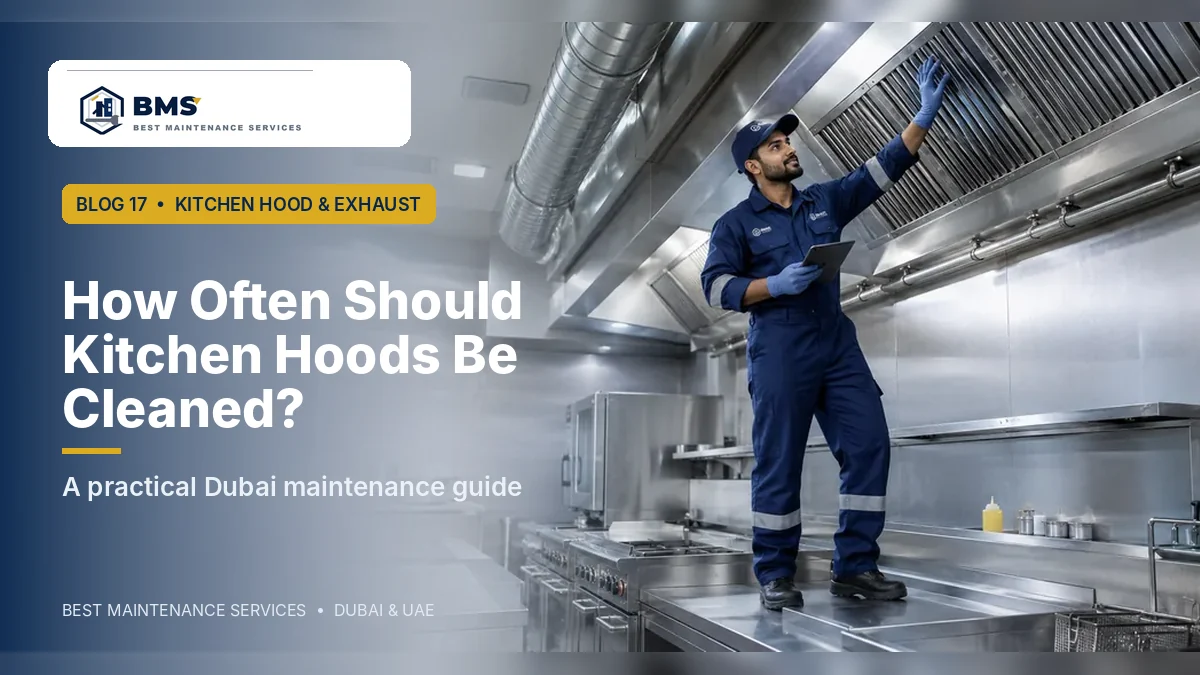
Commercial kitchen hood cleaning frequency should reflect cooking volume, grease load and system condition. Learn how Dubai kitchens can build an inspection-led hood, filter, duct and fan…
A commercial kitchen does not become safe or well maintained simply because the hood was cleaned “once this year.” Grease accumulation depends on what the kitchen cooks, how much it cooks, how long it operates, the quality and condition of filters, airflow and the design of the extraction system. A busy fried-food operation can load the system very differently from a light-use café even when both have similar hood dimensions.
The most reliable approach to kitchen hood cleaning frequency in Dubai is therefore inspection-led. Establish a starting schedule, inspect the real grease condition, record what is found, and shorten or extend routine tasks only when the evidence supports it. Filters, canopy surfaces, ducts and exhaust fans may also need different intervals because they collect deposits at different rates.
Separate Daily/Weekly Kitchen Care From Specialist Exhaust Cleaning
Kitchen staff can control visible grease through normal cleaning and frequent filter care where appropriate. Specialist maintenance addresses areas that routine staff cannot safely or effectively reach, including internal plenums, ducts and fans. Mixing these tasks into one schedule makes it easy to believe the full system is maintained when only the visible hood has been wiped.
Create separate lines in the maintenance plan for filters, hood/canopy, internal duct route and exhaust fan. That makes overdue components obvious.
Cooking Type Has a Major Effect on Grease Load
Frying, grilling, wok cooking and heavy oil use can create greater grease loading than lower-grease cooking methods. High-volume meat production, busy hotel kitchens and continuous food production can also require closer inspection than a low-volume pantry or café.
Use operating reality rather than business type alone. Two restaurants with the same cuisine can have different extraction loads because one is open eighteen hours a day and the other operates only for dinner.
Operating Hours and Peak Periods Matter
Long operating hours increase total cooking emissions. Seasonal demand, Ramadan operating patterns, events, delivery expansion or a new menu can change the load quickly. A maintenance frequency set when the kitchen opened should be reviewed when operations materially change.
If filters become saturated much sooner than expected or grease becomes visible beyond the filter bank, treat that as evidence to review the schedule rather than waiting for the calendar date.
Filters Usually Need the Most Frequent Attention
Grease filters are the first control point and should be kept clean enough to perform as intended. The exact routine depends on type, cooking load and kitchen procedures. Staff should also watch for damaged, missing or incorrectly installed filters because these conditions can increase downstream contamination.
A filter-cleaning schedule does not replace duct inspection. Even well-maintained filters do not capture every contaminant.
Use Duct and Fan Inspections to Set Specialist Frequency
Internal duct deposits are not always visible from the kitchen. Periodic inspection of accessible duct areas and the fan provides evidence of the actual accumulation rate. If heavy deposits are found well before the planned cleaning date, shorten the interval. If conditions remain controlled, keep documenting the result rather than assuming the system is permanently low risk.
The related BMS guide on hood vs filter vs duct vs exhaust fan cleaning explains the components that should be considered separately.
Suggested Inspection-Led Maintenance Framework
| Task | Planning approach |
|---|---|
| Visible hood surfaces | Routine kitchen cleaning plus periodic specialist review. |
| Grease filters | Frequent condition checks and cleaning/replacement according to load/type. |
| Plenum/access areas | Inspect during specialist service and when filter performance is questioned. |
| Ductwork | Periodic inspection; clean when deposit condition and applicable requirements indicate. |
| Exhaust fan/discharge | Inspect with duct system; clean/service according to condition. |
| Records | Log condition, scope completed, photographs and next due action. |
Warning Signs the Current Interval Is Too Long
- Filters loading heavily long before the scheduled service.
- Visible grease beyond the filter bank.
- Grease dripping or staining around hood/duct access.
- Persistent cooking odor linked to the extraction system.
- Increasing difficulty cleaning deposits during each visit.
- Grease accumulation at the exhaust fan or discharge area.
- A major increase in kitchen volume without a schedule review.
Do Not Wait for Airflow Problems to Become the Trigger
A poorly maintained extraction system may eventually show reduced performance, but airflow complaints should not be the maintenance strategy. Grease deposits need to be managed before they become severe enough to create operational symptoms.
If airflow appears weak, investigate filters, fan condition, controls and the wider system rather than assuming cleaning alone will fix every ventilation problem.
Record the Condition at Every Specialist Visit
Use a repeatable condition record: light, moderate or heavy deposit; areas cleaned; inaccessible sections; defects; photographs; and next recommended inspection or cleaning date. Over several visits, the facility team gets a site-specific maintenance history rather than generic advice.
For multi-site operators, standard records make it possible to identify which branches have unusually high loading and require a different schedule.
Coordinate Hood Maintenance With Wider Kitchen Maintenance
A restaurant maintenance programme should also consider grease traps, drains, cleaning, electrical equipment and other technical systems. These services should remain distinct but coordinated so one shutdown window can be used efficiently where appropriate.
BMS can connect hood/exhaust work with its wider commercial kitchen maintenance services without blurring what was actually completed.
A Practical Rule: Inspect, Record, Then Set the Interval
If you do not have a reliable service history, begin with an inspection rather than guessing a long interval. Document the current condition and how quickly grease returns. The next date can then be based on evidence and any applicable landlord, insurer, project or authority requirements for that site.
For a BMS assessment, provide the kitchen type, cooking methods, operating hours, number of hoods, filter condition, known duct/fan access and last service date. That is enough to start building a practical hood, duct and exhaust maintenance plan.
Information to Prepare Before a Hood or Exhaust Visit
For kitchen hood cleaning frequency Dubai, provide the kitchen type, cooking methods, operating hours, number of hoods, approximate hood dimensions, filter type, fan location if known, last specialist service date and the shutdown window available. Photographs of the canopy, filter bank and accessible fan or duct areas can help define whether the request is surface cleaning, filter maintenance, internal duct work, fan cleaning or a complete extraction-system inspection.
If the site has access restrictions, high-level roof equipment, permit requirements or a managed-building approval process, state that before attendance. These conditions can affect manpower, access equipment, isolation and the time required to complete the scope safely.
Document What Was Actually Cleaned
The final service record should list the components inspected and cleaned rather than using one generic phrase such as hood cleaning. It should identify filters, canopy/plenum, accessible duct sections, fan and discharge area where included, and should note any inaccessible sections or defects. Before-and-after photographs are particularly useful for hidden extraction components.
This component-level record helps the next maintenance decision. If grease returns quickly in one area, the facility manager can change the correct interval instead of increasing every cleaning task indiscriminately.
Coordinate With Kitchen Operations
Specialist extraction work can require equipment protection, isolation, access above ceilings or at roof level and a period when cooking is stopped. Planning the service around the kitchen schedule reduces disruption and gives technicians enough access to complete the agreed work rather than rushing only the visible surfaces.
For multi-system work, BMS can coordinate hood/exhaust and drainage scopes with grease-trap sizing, supply, installation or replacement planning. Routine grease-trap pumping, emptying and cleaning are not provided by BMS and remain a separate specialist scope.
Questions to Confirm Before Approving the Work
Before approving work related to kitchen hood cleaning frequency Dubai, confirm the symptom or operational objective, what has already been tried, the exact scope included, any exclusions, the access or shutdown required, and how completion will be verified. This avoids a common maintenance problem where the customer and contractor use the same service name but expect different work.
For corrective work, ask what evidence supports the recommended action and what would change the recommendation. For planned maintenance, ask what condition will be checked at the next visit and how the interval should be adjusted if the system is loading faster or slower than expected. These questions turn the service from a one-off transaction into a controlled maintenance decision.
Property and Operations Context Matters
The same issue described in How Often Should a Commercial Kitchen Hood & Exhaust System Be Cleaned in Dubai? can have different consequences in a villa, apartment tower, restaurant, hotel or managed commercial site. Access permissions, occupied areas, service hours, equipment shutdown, noise, protection of finishes and coordination with building management can all affect the practical method even when the technical fault is similar.
Tell BMS about those constraints before attendance. A technically correct repair or cleaning method still needs to fit the property safely and with the least reasonable disruption. Where several trades are involved, each technical scope should remain separately documented even if the visit is coordinated.
Use the Result to Prevent Recurrence
After the immediate work is complete, record the root cause where it is known, the condition found, parts or areas serviced, and any prevention advice that is specific to the property. If the same symptom returns, compare it with the previous record instead of starting from assumptions.
Recurring maintenance records are valuable because they reflect real questions customers ask and help future service decisions. BMS can use anonymized recurring problem patterns, genuine project photographs and verified service experience to improve future guidance without inventing claims or copying generic advice.
Final approval should record the diagnosed condition, completed scope, verification result, responsible follow-up action and next review date so the maintenance history remains useful.
Where a fault has operational consequences, the customer should also record access limitations, shutdown time, photographs and any recommendation that was deferred. This helps the next visit begin with evidence instead of repeating the same checks.
For managed properties, assign the follow-up to a named person and confirm whether the issue is closed, being monitored or requires a separate quotation. Clear status prevents technical recommendations from being lost after the immediate symptom disappears.
Need a quote or technical guidance?
Share your emirate, property or business type, relevant photos, site access details and preferred timing. BMS will confirm the appropriate next step.
Frequently Asked Questions
Is there one cleaning interval for every restaurant hood?
No. Cooking type, volume, hours, grease production, filter condition and inspection findings can justify different cleaning frequencies.
Should filters be cleaned more often than ducts?
Often yes. Filters are first-line grease capture components and may require much more frequent routine attention than the internal duct route.
What should determine the next cleaning date?
Use the previous condition, current cooking load, inspection findings, operating changes and applicable property or authority requirements rather than relying only on a generic calendar interval.