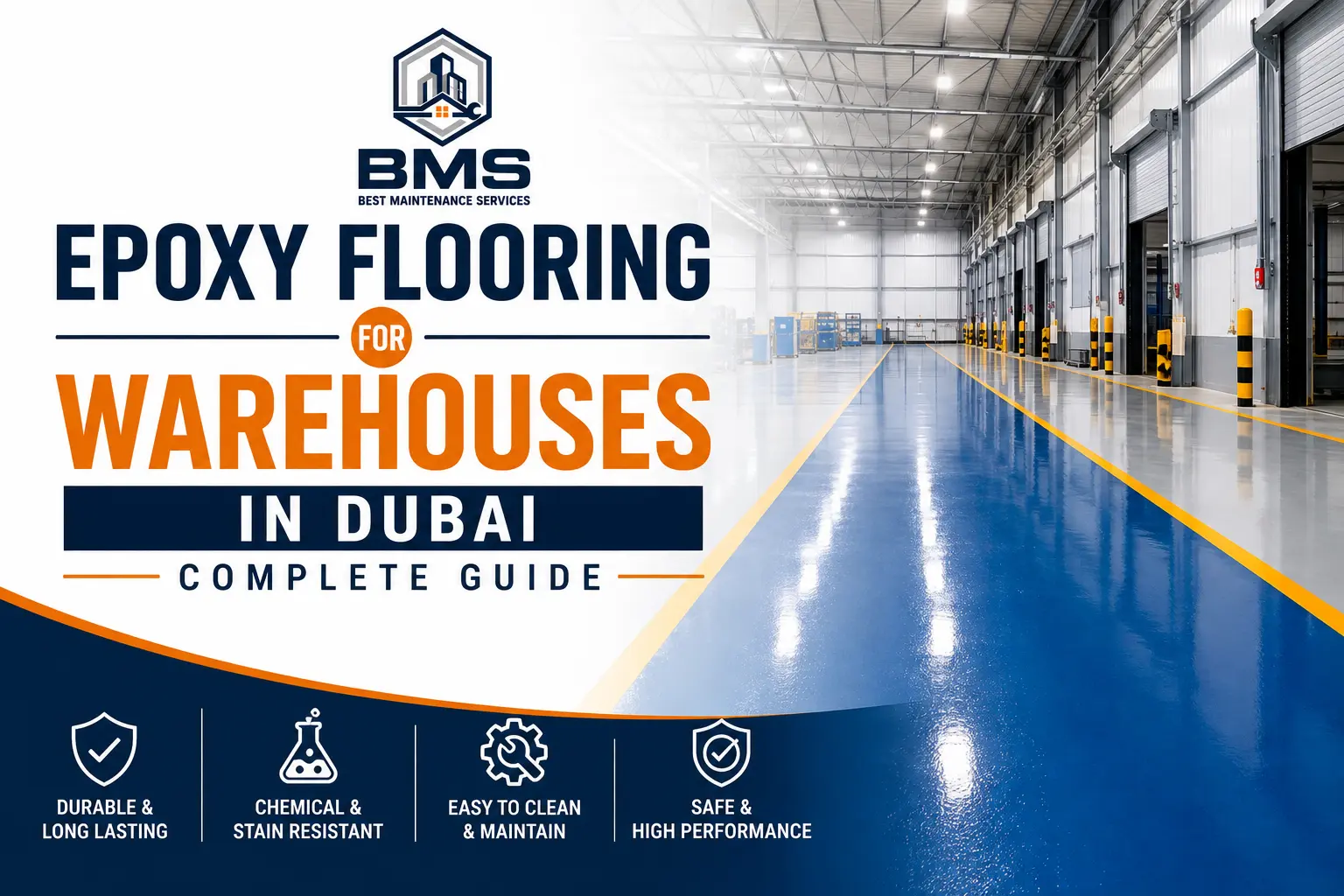
Learn how epoxy flooring protects Dubai warehouses from forklift traffic, heavy loads, chemicals, dust, and daily wear. Explore flooring types, costs, installation, maintenance, and…
If your warehouse floor is cracked, dusty, or struggling to hold up under daily forklift traffic and heavy loads, you are not alone. Many warehouse operators across Dubai face the same challenge. Bare concrete floors deteriorate fast in high-traffic industrial environments and the cost of ignoring the problem grows quickly. Epoxy flooring for warehouses in Dubai is one of the most practical and cost-effective upgrades any facility manager can make.
The right warehouse epoxy flooring solution creates a seamless, durable, and easy-to-clean surface that withstands heavy machinery, chemical spills, and the intense daily demands of a busy industrial facility. It also helps you meet safety standards, reduce maintenance time, and give your facility a cleaner, more professional appearance. Whether you manage a logistics hub in JAFZA, a distribution centre in Dubai South, or a manufacturing facility in Al Quoz, the right industrial flooring solution makes a real operational difference.
At Best Maintenance Services, we have helped hundreds of businesses across Dubai protect and upgrade their warehouse and industrial floors. This guide covers everything you need to know from choosing the right epoxy floor coating to understanding installation, maintenance, and cost. For related services, we also offer professional painting services in the UAE and epoxy flooring installation and supply in Dubai to serve businesses of all sizes.
What Is Epoxy Flooring for Warehouses?
How Epoxy Flooring Works
Epoxy flooring is a protective floor coating system made from epoxy resin and a hardener. When these two components are combined, they form a strong, rigid surface that bonds directly to your concrete substrate. The result is a seamless, non-porous industrial floor that can handle serious mechanical wear and chemical exposure far better than bare or sealed concrete.
What Makes Industrial Epoxy Different From Standard Floor Paint?
Standard floor paint sits on top of the concrete surface and wears away quickly. Industrial epoxy flooring penetrates into and bonds with the concrete itself, creating a rigid protective layer that resists abrasion, impact, and chemical attack. The thickness, system design, and surface preparation all determine how well it performs in your specific warehouse environment.
Where Epoxy Flooring Fits in a Warehouse Environment
Epoxy floor coating is used across all major warehouse zones from storage and racking areas to forklift aisles, loading docks, packing areas, battery charging stations, and even cold storage facilities. Each area may need a slightly different system, which is why a proper site assessment is essential before any installation begins.
Why Warehouses in Dubai Need Durable Flooring
Heavy Forklift and Pallet Traffic
Forklift traffic is one of the most damaging forces on any warehouse floor. The combination of point loads, turning movements, and constant vibration can crack and chip bare concrete surprisingly quickly. A properly installed heavy-duty epoxy flooring system absorbs and distributes these loads without breaking down.
High Loads From Racking and Stored Goods
Heavy pallet racks and dense storage loads concentrate significant weight on small footprint areas of the floor. Over time, this causes surface spalling and cracks in unprotected concrete. The right epoxy mortar system or high-build epoxy flooring provides the rigid substrate needed to handle these pressures without damage.
Dust From Bare Concrete Floors
Bare concrete generates fine dust constantly even without heavy traffic. This dust settles on products, contaminates stored goods, and creates hygiene problems. In logistics and food warehouse environments, this is a serious issue. Sealed epoxy floors eliminate concrete dusting completely.
Oil, Chemicals, and Other Spills
Industrial facilities regularly deal with oil, fuel, cleaning chemicals, and other liquids. When these penetrate into unprotected concrete, they weaken the surface and become very difficult to remove. Chemical-resistant epoxy flooring creates a non-porous surface that resists penetration and makes spill cleanup fast and simple.
Heat, Humidity, and Dubai's Harsh Conditions
Dubai's extreme heat, high humidity, and temperature fluctuations put serious stress on flooring materials. Concrete expands and contracts with temperature changes, causing cracks over time. A correctly specified industrial floor coating system is designed to handle these conditions particularly important for warehouses in Dubai Industrial City, Ras Al Khor, and Dubai Investment Park.
Frequent Cleaning and Daily Wear
High-use warehouse floors require frequent cleaning. Rough, porous concrete is difficult to clean properly and holds dirt in its surface texture. A seamless epoxy floor is smooth, easy to clean with standard equipment, and resists bacterial growth making it an ideal surface for any commercial warehouse environment.
Key Benefits of Epoxy Flooring in Warehouses
Handles Heavy Traffic and Mechanical Wear
Industrial epoxy flooring is engineered for environments where standard coatings simply fail. It handles forklift-resistant flooring demands, impact from dropped materials, and constant abrasive wear without cracking or peeling when correctly installed.
Creates a Seamless and Easy-to-Clean Surface
A properly installed seamless industrial flooring system has no grout lines, seams, or joints where dirt and bacteria can hide. Spills are wiped up quickly, cleaning cycles are shorter, and hygiene standards are easier to maintain especially important in food storage and pharmaceutical warehouse environments.
Helps Control Concrete Dust
Sealing your concrete with epoxy floor coating stops the constant release of fine concrete particles. This protects your stored products, improves air quality inside the warehouse, and reduces cleaning frequency significantly.
Resists Oils and Common Industrial Chemicals
Oil-resistant flooring is critical for automotive, manufacturing, and logistics warehouses. Epoxy creates an impermeable surface layer that prevents oils and chemicals from soaking into the concrete protecting both the floor and the environment beneath it.
Improves Floor Safety and Visibility
Anti-slip epoxy flooring with added aggregate gives workers safe footing even in wet conditions. Combined with high-visibility floor markings and clearly defined pedestrian walkways, your warehouse becomes a significantly safer working environment.
Reduces Routine Maintenance
Low-maintenance flooring is a genuine operational advantage. Epoxy-coated warehouse floors require far less maintenance than bare concrete fewer repairs, faster cleaning, and a surface that retains its appearance over many years of heavy use.
Protects the Concrete Substrate
A quality epoxy system acts as a protective barrier between your concrete and everything that damages it traffic, moisture, chemicals, and physical impact. This extends the life of your structural slab and avoids costly concrete repairs in the future.
Gives the Warehouse a Cleaner, More Professional Appearance
First impressions matter even in an industrial setting. A clean, well-maintained warehouse floor coating communicates professionalism to clients, auditors, and staff. It also signals that your facility takes safety and maintenance seriously.
Types of Epoxy Flooring for Warehouses
Standard Epoxy Coating
A standard epoxy coating is the entry-level option typically 200 to 500 microns thick. It seals bare concrete, controls dust, and creates a clean surface. Suitable for lighter-use storage areas with limited forklift traffic.
High-Build Epoxy Flooring
High-build epoxy flooring is applied at 500 microns or more and offers significantly better durability and protection. It handles moderate to heavy forklift traffic and is a common specification for general industrial warehouse flooring in Dubai.
Self-Leveling Epoxy
Self-leveling epoxy flows into an ultra-smooth, seamless surface and is popular in environments that require very high hygiene standards. It is commonly used in food warehouse flooring, pharmaceutical storage, and clean rooms.
Heavy-Duty Epoxy Flooring
Heavy-duty warehouse floor coating systems are designed for the most demanding environments including facilities with repeated heavy forklift movement, high point loads from racking, and constant mechanical wear. These systems are typically specified for large logistics warehouses and distribution centers.
Anti-Slip Epoxy Flooring
Anti-slip warehouse flooring incorporates aggregate (sand or aluminium oxide) into the topcoat to improve grip underfoot. This is essential for loading areas, areas exposed to water or liquids, and any zone with pedestrian and vehicle traffic mix.
Chemical-Resistant Epoxy Flooring
For facilities that handle harsh chemicals, solvents, or fuels regularly, chemical-resistant warehouse flooring provides a highly resistant protective layer. This is critical for automotive workshops, chemical storage facilities, and manufacturing plants.
Epoxy Mortar Systems
Epoxy mortar is the thickest and most robust epoxy system available often applied at 4–9mm. It is designed for environments with extreme mechanical abuse, including areas where heavy machinery operates or where thermal cycling is severe. This is the system of choice for heavily trafficked warehouse loading docks and industrial production areas.
Specialized Flooring for Cold Storage Areas
Cold storage flooring requires a system specifically formulated to handle low temperatures and the condensation that occurs during temperature cycles. Standard epoxy systems can fail in these conditions, so correct specification is essential for any temperature-controlled warehouse facility.
How to Choose the Right Epoxy System for Your Warehouse
Consider Forklift and Vehicle Traffic
The frequency and type of forklift traffic is the single most important factor in selecting an epoxy system. Facilities with constant forklift movement require thick, high-build or mortar systems, not standard coatings.
Check the Expected Floor Loads
Point loads from pallet racks and storage racking can be very high on a small area. Your flooring contractor should understand your racking configuration and loading before recommending a system.
Identify Chemical and Oil Exposure
If your facility regularly handles oils, fuels, cleaning products, or industrial chemicals, you need a specifically formulated chemical-resistant system not a standard coating.
Consider Moisture and Concrete Conditions
Moisture in or beneath the concrete slab is one of the most common causes of epoxy floor delamination. A proper moisture test before installation is essential, especially for ground-floor slabs in humid Dubai environments.
Choose the Right Slip Resistance
Areas with water, oil, or other liquids need anti-slip aggregate incorporated into the finish coat. The level of slip resistance should match the specific zone warehouse aisles have different requirements to pedestrian walkways.
Consider Temperature and Thermal Changes
Some warehouse environments experience significant thermal cycling particularly cold stores and facilities next to processing equipment. The epoxy system must be compatible with these temperature variations to prevent cracking and loss of adhesion.
Match the Flooring to Each Warehouse Zone
A good warehouse flooring plan does not use a single system across the entire facility. Different areas loading docks, forklift aisles, pedestrian walkways, battery charging areas each have specific needs. The best results come from zone-by-zone specification.
Epoxy Flooring Requirements for Different Warehouse Areas
| Warehouse Zone | Recommended Epoxy System |
| Storage & Racking Areas | High-build epoxy (500+ microns) |
| Forklift Aisles | Heavy-duty epoxy or epoxy mortar |
| Loading & Unloading Areas | Epoxy mortar + anti-slip aggregate |
| Packing & Dispatch Areas | Self-leveling epoxy |
| Battery Charging Areas | Chemical-resistant epoxy |
| Cold Storage Areas | Low-temperature formulated epoxy |
| Pedestrian Walkways | Anti-slip epoxy with high-visibility markings |
| Maintenance & Workshop Areas | Chemical-resistant heavy-duty epoxy |
Epoxy Flooring Installation Process for Warehouses
1. Site Inspection and Floor Assessment
Every professional installation begins with a thorough site visit. Your contractor should assess the entire warehouse floor identifying damaged areas, checking for contamination, and understanding how each zone is used operationally.
2. Checking the Concrete Condition
The condition of your concrete substrate determines which system is appropriate and how much preparation work is required. Heavily damaged or contaminated concrete needs repair before any coating is applied.
3. Moisture Testing
Moisture testing is a critical and non-negotiable step. High moisture vapor in the concrete will prevent the epoxy from bonding correctly, leading to blistering and delamination shortly after installation. Reputable contractors always test before they coat.
4. Mechanical Surface Preparation
Mechanical grinding or shot blasting creates the surface profile that allows epoxy to bond strongly to the concrete. The right concrete profiling depth depends on the system being applied. This step is the foundation of a long-lasting result.
5. Crack and Joint Repair
All cracks, spalled areas, and damaged joints must be repaired before coating. Filling cracks with epoxy filler or flexible joint sealant prevents them from telegraph through the finished surface and ensures the floor coating has a stable base.
6. Primer Application
A penetrating primer is applied first to seal the concrete and promote strong adhesion between the substrate and the epoxy body coats. Skipping this step is a common cause of early coating failure.
7. Epoxy Base and Body Coats
The main epoxy layers are applied in sequence, building up to the specified film thickness. Each coat must cure properly before the next is applied. The number of coats depends on the selected system ranging from one coat for standard applications to three or more for heavy-duty warehouse flooring systems.
8. Anti-Slip Aggregate Where Required
In zones where slip resistance is needed, aggregate is broadcast into the wet topcoat and sealed in. This provides grip without compromising the cleanability or appearance of the finished floor.
9. Topcoat Application
A clear or pigmented topcoat is applied as the final protective layer. The topcoat provides UV resistance, gloss finish, and an additional barrier against chemical and mechanical wear.
10. Warehouse Line Marking and Safety Zones
Warehouse line marking is applied as part of the finishing stage, creating clearly defined forklift lanes, pedestrian walkways, loading zones, and hazard areas. This is a critical part of any professional warehouse safety flooring installation.
11. Curing and Final Inspection
Epoxy requires a curing period before the floor can accept traffic. Light foot traffic is typically possible within 24 hours, but full curing for forklift traffic usually takes 5–7 days. A final inspection confirms the surface is complete and ready for use.
Why Surface Preparation Matters Before Epoxy Installation
Removing Dust, Oil, Grease, and Contaminants
Any contamination on the concrete surface oil, grease, previous coatings, or dirt will prevent the epoxy from bonding. Thorough oil removal and decontamination before application is essential. This is especially important for warehouse floors that have seen years of forklift and machinery use.
Repairing Cracks and Damaged Concrete
Cracks that are not filled correctly before coating will eventually reflect through the new surface, compromising both appearance and performance. Proper concrete repair before coating prevents this entirely.
Creating the Right Surface Profile
Mechanical grinding or shot blasting creates a porous, textured surface that gives epoxy the grip it needs. Without the correct surface profile, even the best epoxy system will fail to bond and will peel under traffic loads.
Managing Moisture in the Concrete
Moisture vapor rising through the slab creates pressure beneath the epoxy layer, causing bubbling, blistering, and delamination. Managing moisture correctly through testing, drainage design, and moisture-tolerant primer selection is one of the most technically demanding aspects of industrial floor installation.
Ensuring Proper Adhesion
Every subsequent layer of the epoxy system depends on the one below it for its strength. When preparation is done correctly, the finished floor is practically inseparable from the concrete beneath it.
What Happens When Preparation Is Skipped?
| â Common Failure Modes When Surface Preparation Is Skipped:Peeling and delamination within months of installationBubbling and blistering caused by trapped moisturePoor adhesion leading to early mechanical failureCoating failure concentrated in the highest-traffic zonesCostly removal and reinstallation far more expensive than doing it correctly the first time |
Epoxy Flooring vs Other Warehouse Flooring Options
| Flooring Option | Durability | Chemical Resistance | Cleanability | Cost (AED/m²) |
| Epoxy Flooring | Excellent | Excellent | Excellent | AED 25–70+ |
| Bare Concrete | Poor | Poor | Difficult | Low (short-term) |
| Concrete Sealer | Fair | Fair | Moderate | AED 10–20 |
| Polished Concrete | Good | Moderate | Good | AED 30–60 |
| Polyurethane Flooring | Excellent | Excellent | Excellent | AED 45–90+ |
Which Option Is Best for Your Warehouse?
For most standard warehouse environments in Dubai, epoxy flooring offers the best balance of performance, safety, cleanability, and cost. Polyurethane flooring may be the better choice for environments with severe thermal cycling or highly aggressive chemical exposure but at a higher cost. A site-specific assessment is the only reliable way to confirm the right system.
How Much Does Warehouse Epoxy Flooring Cost in Dubai?
What Determines the Cost Per Square Meter?
Warehouse epoxy flooring in Dubai is priced by the square metre, but the final cost per m² varies significantly depending on several site-specific factors. There is no single universal price that applies to every project.
| Cost Factor | Impact on Price |
| Floor Area Size | Larger areas = lower cost per m² |
| Concrete Condition | More repairs = higher cost |
| Epoxy System Type | Standard vs heavy-duty vs mortar |
| Coating Thickness | Thicker systems = higher material cost |
| Surface Preparation Needed | Grinding, shot blasting, contamination removal |
| Anti-Slip Requirements | Additional material and labour |
| Line Marking | Added cost per zone |
| Site Accessibility | Equipment access affects installation time |
Typical Price Ranges in Dubai (AED)
| Epoxy System | Approximate Cost (AED/m²) |
| Standard Epoxy Coating | AED 25 – 40 per m² |
| High-Build Epoxy Flooring | AED 35 – 55 per m² |
| Self-Leveling Epoxy | AED 45 – 65 per m² |
| Heavy-Duty / Epoxy Mortar | AED 60 – 90+ per m² |
| Chemical-Resistant System | AED 55 – 80+ per m² |
Why the Cheapest Quote May Not Be the Best Option
A low quote almost always means shortcuts thinner coatings, inadequate surface preparation, or inferior materials. When a poorly installed epoxy warehouse floor fails, the cost of removal and reinstallation is far greater than the original saving. Always ask for a detailed specification not just a price per m².
How Long Does Epoxy Warehouse Flooring Last?
Factors That Affect Its Lifespan
A professionally installed industrial epoxy floor in a warehouse should last between 7 and 15 years under normal operating conditions. The actual lifespan depends on installation quality, traffic intensity, maintenance practices, and the type of system specified.
Traffic and Forklift Usage
Heavy and frequent forklift movement reduces the life of any floor coating. Systems specified correctly for the actual traffic load will outlast systems that were under-specified for the environment.
Quality of Installation
The skill of the installation team matters enormously. Correct mixing ratios, proper coat thickness, and appropriate curing conditions between coats all determine whether the floor lasts 5 years or 15.
Surface Preparation
Poor preparation is the leading cause of early failure. A floor with excellent surface preparation and a modest coating system will often outperform a thick coating applied over a poorly prepared surface.
Cleaning and Maintenance
Regular cleaning using the right products preserves the surface and extends coating life. Abrasive cleaning agents and harsh chemicals can degrade the topcoat prematurely.
Signs Your Warehouse Floor Needs Repair or Recoating
| 🔍 Watch for These Warning Signs:Peeling or lifting at the edges or high-traffic zonesVisible cracks or chips in the coating surfaceDull or worn finish in forklift aislesConcrete dusting reappearing through the coatingFading or damaged safety line markingsStaining that can no longer be cleaned off |
How to Maintain an Epoxy Warehouse Floor
Regular Sweeping and Dust Removal
Daily sweeping or dust-mopping removes abrasive grit and particles that gradually wear down the topcoat. This is the single most effective routine maintenance step for prolonging the life of your floor.
Cleaning Spills Quickly
Even on a chemical-resistant epoxy floor, prompt spill cleanup is important. Some chemicals can affect the topcoat if left for extended periods. Immediate cleanup prevents staining and surface degradation.
Using Suitable Cleaning Products
Mild detergents diluted in water are the most appropriate cleaning products for epoxy warehouse floors. Avoid strong acids, solvents, or highly alkaline cleaners these can dull the surface and reduce chemical resistance over time.
Inspecting High-Traffic Areas
Schedule a visual inspection of your forklift aisles and loading areas every 3–6 months. Catching early signs of wear allows spot repairs before the problem spreads.
Repairing Chips, Cracks, and Damaged Sections
Minor chips and cracks can be repaired with compatible epoxy repair compounds. Addressing small damage early prevents it from spreading and avoids the need for full-section recoating.
Maintaining Safety Markings
Floor markings fade with traffic over time. Repaint forklift lanes, pedestrian walkways, and hazard zones as needed to keep your warehouse compliant with workplace safety standards.
Common Epoxy Flooring Problems and Why They Happen
Peeling or Delamination
The most common failure mode. Usually caused by insufficient surface preparation, moisture in the concrete, or a contaminated substrate at the time of installation.
Bubbling and Blistering
Bubbling is almost always caused by moisture vapor rising through the concrete slab. This is why moisture testing before installation is non-negotiable for any reputable contractor.
Cracking
Cracks in the epoxy coating usually reflect pre-existing cracks in the concrete substrate that were not correctly repaired before coating. They can also result from extreme point loads or inadequate system thickness.
Discoloration
UV exposure, chemical contact, and heat can cause colour changes in some epoxy systems particularly in areas with direct sunlight. UV-stable topcoats mitigate this in areas with natural light exposure.
Slippery Surfaces
Smooth epoxy becomes slippery when wet. This is why anti-slip aggregate is always recommended for loading areas, wash-down zones, and any area likely to have liquid on the floor.
Premature Wear
Wearing faster than expected usually means the system was under-specified for the actual traffic load, the coating thickness was insufficient, or the surface preparation was inadequate.
Uneven or Patchy Finish
Application inconsistencies during installation uneven spreading, insufficient coverage, or application in poor temperature conditions result in a patchy or uneven appearance.
Poor Adhesion
Adhesion failure across a large area is almost always a surface preparation problem. When the concrete is not properly profiled or cleaned, the epoxy cannot bond correctly.
How to Avoid Epoxy Flooring Failures in a Dubai Warehouse
Start With a Proper Site Inspection
Never accept a quote from a contractor who has not visited your facility in person. A site inspection is the only way to correctly specify the system, identify problem areas, and provide an accurate price.
Select the System Based on Warehouse Use
The system must match the actual operational demands of your warehouse. A standard coating in a heavy forklift environment will fail quickly. Zone-specific specification avoids this completely.
Prepare the Concrete Correctly
Insist on mechanical preparation grinding or shot blasting before any coating is applied. Chemical etching alone is not sufficient for industrial warehouse applications.
Control Moisture Before Installation
If the moisture test results are above acceptable levels, address the moisture problem before installation not after. A moisture-tolerant primer or a barrier system may be required.
Use Qualified Installation Professionals
Industrial floor coating is a skilled trade. Choose a contractor with verified warehouse epoxy installation experience, proper equipment, and a clear specification document for your project.
Allow Proper Curing Time
Do not rush the curing period. Returning forklifts to the floor before the epoxy has fully cured is a common cause of early surface damage. Follow the contractor's curing schedule precisely.
Follow a Preventive Maintenance Plan
Establish a regular maintenance routine from day one. Cleaning, inspection, and prompt spot repairs are far more cost-effective than emergency repairs or early recoating. Best Maintenance Services can provide a structured preventive maintenance plan for your warehouse floor as part of our ongoing commercial maintenance contracts.
Safety Features to Consider for Warehouse Flooring
Anti-Slip Surfaces
Anti-slip epoxy flooring is a basic safety requirement for any warehouse that handles liquids, operates in outdoor or semi-outdoor areas, or has wash-down operations. It is not optional it is a workplace safety requirement.
Pedestrian Walkways
Clearly marked pedestrian zones physically separate foot traffic from forklift routes, reducing the risk of accidents significantly. High-visibility yellow markings are the industry standard.
Forklift Lane Markings
Designated forklift lanes keep vehicle movement predictable and organised. Clear lane markings also help new staff navigate the warehouse safely.
Hazard and Restricted Areas
High-risk zones such as loading bays, battery charging areas, and areas near heavy machinery should be clearly marked with appropriate warning colours and signage integrated into the floor system.
High-Visibility Floor Zones
High-visibility floor markings using yellow, red, and green colour coding communicate critical safety information at a glance emergency exits, fire equipment locations, restricted zones, and safe travel routes.
Chemical and Spill Protection
In facilities where chemical spills are a risk, dedicated containment zones with bunded flooring and chemical-resistant coatings provide an additional layer of environmental and safety protection.
Is Epoxy Flooring Suitable for Every Warehouse?
Warehouses With Heavy Forklift Traffic
Yes when the correct heavy-duty or mortar system is specified. An under-specified system in a heavy forklift environment is the most common cause of early failure.
Logistics and Distribution Centers
Logistics warehouse flooring and distribution center flooring benefit enormously from epoxy. The seamless, durable, easy-to-clean surface supports high operational throughput and reduces maintenance disruptions.
E-Commerce Fulfillment Warehouses
Fulfillment center flooring demands a surface that can handle constant foot traffic, trolleys, and picking equipment while remaining clean and easy to maintain. Self-leveling epoxy is a popular choice for these environments.
Manufacturing Facilities
Manufacturing floors deal with oil, chemicals, heavy machinery, and point loads simultaneously. A zone-specific epoxy specification using different systems in different areas delivers the best performance.
Food and Beverage Storage Areas
Food warehouse flooring must meet hygiene standards and resist contamination. Self-leveling epoxy with anti-microbial properties is an excellent choice for food storage, distribution, and cold chain facilities.
Automotive and Parts Warehouses
Oil and chemical exposure makes oil-resistant flooring essential for automotive warehouse environments. A chemical-resistant epoxy system is the standard specification for automotive workshops and parts storage in Dubai.
Chemical Storage Areas
Highly aggressive chemical environments may require specialist resin systems beyond standard epoxy. Your contractor should confirm compatibility between the epoxy system and the specific chemicals your facility handles.
When Another Flooring System May Be More Suitable
Epoxy is not the right answer for every situation. In environments with extreme thermal cycling, very high levels of UV exposure, or highly aggressive chemical conditions, polyurethane flooring or other specialist resin systems may be more appropriate. A good contractor will tell you this honestly and we always will.
When Should You Upgrade Your Warehouse Floor to Epoxy?
Your Concrete Floor Produces Excessive Dust
Concrete dust is a sign that your slab surface is deteriorating. It contaminates products, damages equipment, and affects hygiene. An epoxy system solves this immediately and permanently.
Forklifts Are Damaging the Surface
Pitting, chipping, and surface breakup under forklift movement indicates the concrete surface can no longer handle the load. A properly specified epoxy system redistributes these loads and protects the slab.
Cracks and Surface Wear Are Increasing
Spreading surface damage is always cheaper to address early. Waiting until the floor is severely damaged increases repair costs significantly before coating can even begin.
Oil and Chemical Stains Are Difficult to Remove
Once concrete becomes saturated with oil and chemical contamination, cleaning becomes increasingly difficult and hygiene standards become hard to maintain. An epoxy seal prevents this entirely.
Cleaning Takes Too Much Time
If your cleaning team is spending excessive time on the warehouse floor, a sealed epoxy surface will reduce cleaning time and effort dramatically.
Floor Markings Are Fading
Faded floor markings are a safety and compliance issue. Repainting markings onto a fresh epoxy surface gives them maximum durability and visibility.
You Need Better Safety and Traffic Management
If your warehouse layout has grown or changed and the current markings no longer reflect actual traffic routes, a full floor refurbishment with new epoxy and line marking delivers a complete safety upgrade.
Frequently Asked Questions About Warehouse Epoxy Flooring
Is epoxy flooring good for warehouses in Dubai?
Yes. Epoxy flooring for warehouses in Dubai is one of the most practical and cost-effective flooring solutions available. It handles heavy traffic, protects concrete, resists chemicals, and creates a safe, clean surface suitable for the local climate and industrial environment.
How much does warehouse epoxy flooring cost in Dubai?
Costs typically range from AED 25 to AED 90+ per square metre, depending on the type of system, floor area, concrete condition, and surface preparation required. Contact Best Maintenance Services for a site-specific quotation.
How long does epoxy flooring take to install?
A standard warehouse project typically takes 3–5 days for a medium-sized facility. Larger projects or those requiring significant concrete repair may take longer. The exact timeline depends on floor area, system type, and preparation work required.
How long should a warehouse stay closed after epoxy installation?
Light foot traffic is usually possible within 24 hours. Forklift and vehicle traffic typically requires a full cure of 5–7 days. Your contractor will provide a specific curing schedule based on the system installed and ambient temperature.
Can epoxy flooring handle forklifts?
Yes when the correct system is specified. Forklift-resistant flooring requires a heavy-duty or epoxy mortar system designed for the actual weight and frequency of forklift movement in your facility.
Is epoxy flooring resistant to oil and chemicals?
Chemical-resistant epoxy flooring resists most common industrial oils, fuels, and cleaning chemicals. For highly aggressive chemical environments, a specialist system is required. Always confirm chemical compatibility during the specification stage.
Can epoxy flooring be applied over old concrete?
Yes providing the concrete is structurally sound and has been properly prepared. Damaged, heavily contaminated, or structurally compromised concrete may require repair or partial replacement before coating.
Is anti-slip epoxy suitable for warehouses?
Anti-slip warehouse flooring is essential for any area that becomes wet loading docks, wash-down areas, and entrances. It is a practical safety requirement, not just an optional extra.
How thick should warehouse epoxy flooring be?
Standard applications range from 200 to 500 microns. Heavy-duty warehouse environments typically require 1mm or more, and epoxy mortar systems can be applied at 4–9mm for the most demanding conditions.
Can epoxy flooring be used in cold storage?
Yes but the system must be specifically formulated for low-temperature application and service conditions. Standard epoxy systems are not suitable for cold storage without specialist formulation.
How do I maintain an epoxy warehouse floor?
Daily dust-mopping or sweeping, prompt spill cleanup, periodic washing with mild detergent, and regular inspections of high-traffic zones. Avoid harsh chemicals, acids, and abrasive cleaning tools.
How long does warehouse epoxy flooring last?
Between 7 and 15 years for a correctly specified and installed industrial epoxy floor under normal warehouse operating conditions. Life expectancy is extended significantly by good maintenance practices and prompt spot repairs.
Why Choose Best Maintenance Services for Warehouse Epoxy Flooring in Dubai?
| â Trusted by 500+ Satisfied Customers Across DubaiBest Maintenance Services is listed on Fixpert Solutions a trusted home services marketplace of the UAE giving you additional assurance of quality and reliability. |
Professional Site Assessment
Every project begins with a proper on-site inspection. We assess your concrete condition, test for moisture, understand how each zone of your warehouse is used, and specify the right system not a generic one. Our 5+ years of industry experience means we have encountered and solved every common warehouse flooring challenge.
Flooring Solutions Based on Your Warehouse Requirements
We do not apply a one-size-fits-all solution. Our team selects the right warehouse floor coating system for each zone of your facility matching traffic loads, chemical exposure, safety requirements, and operational needs for every area of your industrial warehouse.
Proper Surface Preparation
We use professional mechanical grinding and shot blasting equipment to prepare your concrete correctly every time. We conduct proper moisture testing before application. We repair cracks and damaged concrete before coating. This is the foundation of a long-lasting result.
Quality Materials and Professional Application
Our team uses advanced industrial floor coating materials and applies every system to the specified thickness with consistent, professional technique. We do not cut corners on material quality or application because the performance of your floor depends on it.
Safety-Focused Finishes
We include warehouse line marking, anti-slip aggregate, and pedestrian safety zones as standard parts of our warehouse flooring projects creating a safer working environment alongside a durable surface.
Support for Commercial and Industrial Properties
We serve businesses across Dubai from JAFZA and Al Quoz to Dubai South and Ras Al Khor. Our clients include logistics operators, manufacturers, e-commerce businesses, food producers, and property management companies. With 200+ completed commercial maintenance projects, we have the experience and resources to handle projects of any size.
We also provide ongoing preventive maintenance plans, transparent AED pricing, fast response across Dubai, and reliable customer support throughout every project.
Get a Quote for Warehouse Epoxy Flooring in Dubai
Ready to protect your warehouse floor? Contact Best Maintenance Services today for a professional site inspection and a detailed, no-obligation quotation.
Need a quote or technical guidance?
Share your emirate, property or business type, relevant photos, site access details and preferred timing. BMS will confirm the appropriate next step.