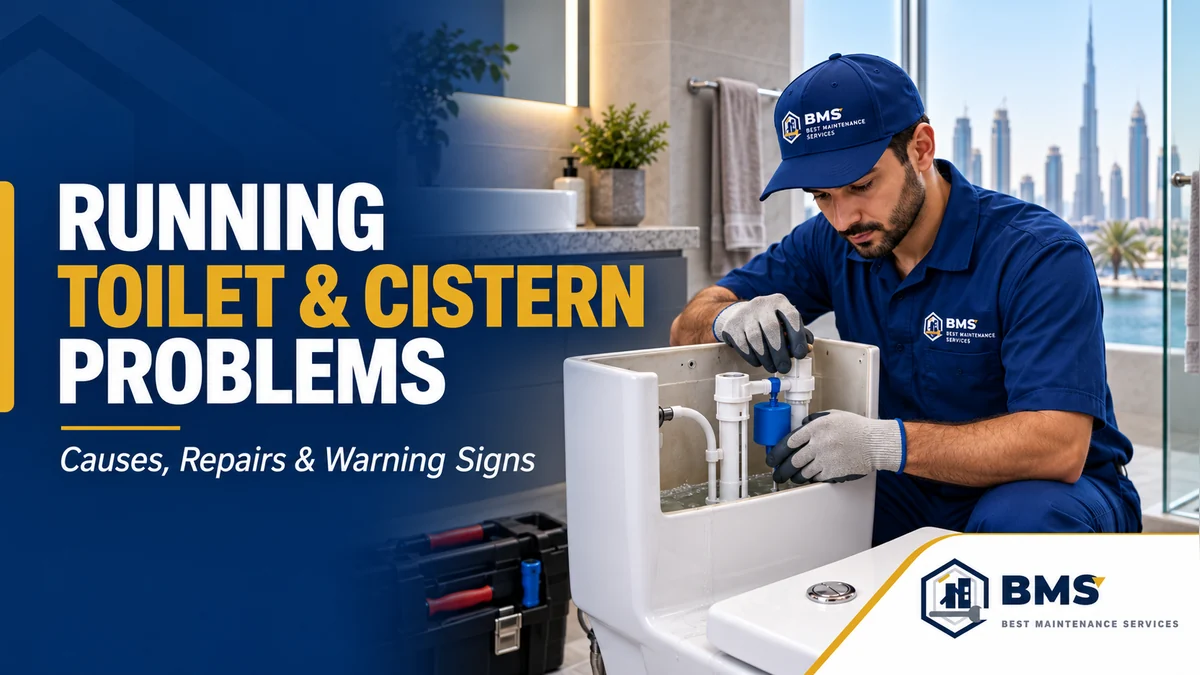
A toilet that keeps running, refilling or leaking into the bowl can waste water and signal a cistern fault. Learn the common causes, repair options and signs that need a plumber.
A toilet that keeps running after the flush, refills every few minutes, makes a constant hissing sound or sends a thin stream of water into the bowl is usually telling you that the cistern is not completing its fill-and-seal cycle correctly. The visible symptom may look small, but leaving it unresolved can waste water and eventually turn a simple internal repair into a more disruptive plumbing problem.
This guide explains the common causes of running toilets and cistern problems in Dubai, what you can observe safely, how concealed and exposed cisterns differ, and when a plumber should inspect the system. BMS provides toilet and bathroom plumbing support in Dubai as part of its wider plumbing service.
Quick answer: why does a toilet keep running?
A toilet usually runs continuously because water is either entering the cistern when it should stop, or escaping from the cistern into the bowl when it should be sealed. Common directions include a worn flush seal, a fill valve that does not shut off correctly, an incorrect float level, a stuck button or cable mechanism, debris around a valve, or an overflow condition inside the cistern.
Common signs of a cistern problem
- Water continues moving in the bowl long after flushing.
- The cistern makes a constant filling or hissing noise.
- The toilet refills by itself even though nobody has used it.
- The flush button feels loose, stiff or does not return correctly.
- The cistern takes unusually long to refill.
- Water appears around the toilet, supply hose or isolation valve.
- The toilet flush becomes weak or inconsistent.
These symptoms do not all have the same cause. The useful diagnosis is to separate an internal cistern leak from an external plumbing leak and from a drainage blockage.
Fill valve problems
The fill valve controls water entering the cistern after a flush. When the target level is reached, the valve should close. If it does not close fully, water can continue entering and eventually run through the overflow path. A worn mechanism, debris, incorrect adjustment or component failure can all interfere with shutoff.
A fill-valve problem often creates a steady filling sound. The water may not be visible outside the toilet because it is being directed safely into the bowl through the overflow route, but the fault still needs attention.
Flush valve and seal problems
The flush valve opens when you press the button and then seals the cistern again. If the sealing surface is worn, dirty, displaced or damaged, a small amount of water can continue leaking into the bowl. The cistern level then falls enough to trigger the fill valve again, which is why some toilets appear to refill every few minutes.
Repeated refill cycles are a useful clue. A technician can inspect the valve, seal and related mechanism and decide whether the component can be serviced or should be replaced.
Float level and overflow issues
The float or level-control mechanism tells the fill valve when the cistern is full. If the level is set incorrectly or the mechanism cannot move as intended, the cistern may continue filling above the normal level. Water then escapes through the overflow route rather than stopping at the correct point.
The answer is not simply to bend or force components. Modern cistern systems vary, and incorrect adjustment can create another fault.
Flush button, cable and actuator faults
Dual-flush systems and concealed cisterns often use buttons, rods, cables or actuator mechanisms. A button that sticks or does not return fully may keep the flush valve slightly open. A disconnected or badly adjusted actuator can also produce weak or incomplete flushing.
If the flush plate or button suddenly feels different, mention that change when you request service. It can shorten the diagnosis.
Concealed cistern problems
Concealed cisterns are common in modern bathrooms because the tank is hidden behind a finished wall or service panel. That does not automatically mean the wall must be demolished for every repair. Many systems provide service access through the flush-plate opening, allowing technicians to inspect or replace common internal components.
However, water appearing on the wall, floor or adjacent room can point to a different issue, such as a supply connection or concealed plumbing leak. In that situation, the repair should follow evidence rather than assuming the cistern mechanism is the only problem.
Running toilet vs blocked toilet: they are different problems
A running toilet is primarily a water-control/cistern issue. A blocked toilet is a drainage issue. A blockage may cause the water level in the bowl to rise, drain slowly or threaten to overflow after flushing. A cistern fault normally causes unwanted water movement even when the drain itself is clear.
If the toilet drains poorly or several fixtures back up together, the correct service may involve drain cleaning rather than only cistern repair.
External toilet leaks need a different diagnosis
Water on the floor should never be assumed to come from the cistern internals. The source can be a supply hose, angle valve, cistern connection, toilet seal, condensation or another nearby plumbing point. Dry the area where safe, observe where the water first appears, and avoid repeatedly flushing if each flush makes the leak worse.
For broader bathroom issues, see our existing bathroom plumbing guide.
What can you check safely?
- Listen for continuous filling or periodic refill sounds.
- Look for continuous movement of water in the toilet bowl.
- Check whether the flush button returns normally.
- Look around the supply hose, valve and floor for visible leakage.
- If you know the correct local isolation valve and it operates safely, use it to limit an uncontrolled leak while arranging service.
Do not force a seized valve or dismantle a concealed system if you are not familiar with it.
Repair or replacement?
Many running-toilet problems are component faults and can be repaired without replacing the entire toilet. A repair may involve the fill valve, flush seal, actuator, button or another serviceable part. Full replacement becomes more reasonable when the ceramic or cistern body is damaged, the system has repeated failures, suitable parts are unavailable, or the overall condition makes repeated repair poor value.
| Problem | Typical direction | Possible action |
|---|---|---|
| Constant filling sound | Fill/level control | Inspect and adjust or replace faulty component |
| Water trickles into bowl | Flush seal/valve | Inspect sealing surface and mechanism |
| Button sticks | Actuator/button | Service or replace mechanism |
| Water on floor | External leak | Trace actual leak source |
| Bowl rises after flush | Possible blockage | Drainage assessment |
When should you arrange a plumber?
Call a plumber when the toilet continuously runs, external water is visible, the isolation valve or supply connection is leaking, a concealed cistern cannot be accessed safely, the fault returns after a simple adjustment, or you are unsure whether the symptom is plumbing or drainage related.
BMS has completed 600+ plumbing service jobs with 98%+ reported customer satisfaction based on the business statistics supplied for this service. Request plumbing support in Dubai with a short description of the toilet type, the symptom and any visible leak so the team can prepare the appropriate next step.
How a plumber separates a cistern fault from a drainage fault
A toilet that keeps refilling is normally a cistern or water-supply problem, while a bowl that rises, drains slowly or backs up points toward the waste side. Those symptoms can happen at the same time, so the technician should identify whether the water is entering the bowl because the flush mechanism is leaking, because the fill valve will not shut off, or because wastewater cannot leave correctly. That distinction determines whether the job belongs to plumbing repair, drain cleaning or both.
Concealed cisterns require controlled access
Wall-hung and concealed-cistern toilets are common in modern Dubai properties. They can look simple from the room, but valves and moving parts sit behind the flush plate or an access opening. Random dismantling can damage finishes or make an otherwise repairable problem more expensive. A professional should confirm the cistern type, available access and replacement-part compatibility before opening more of the installation than necessary.
Repair cost depends on the failed component
There is no useful single price for every running toilet. A straightforward adjustment or seal replacement is different from replacing a fill valve, flush valve, actuator, inlet connection or damaged concealed component. Access, brand compatibility and whether the isolation valve works also affect labour and parts. The practical approach is to diagnose the fault first and quote the repair that solves the actual source of water waste.
What to do if the toilet will not stop running
If the cistern is continuously filling and you know the correct local isolation valve, close it gently until the toilet can be inspected. Do not force a seized valve. If water is escaping outside the toilet, protect nearby finishes and arrange service promptly. For concealed units, avoid removing tiles or cutting access openings without confirming where the serviceable components are located.
Service preparation note
For a more efficient visit, provide the exact Dubai location, property type, affected fixture, when the symptom began and any photos that show the problem clearly. Do not dismantle concealed plumbing or force seized valves simply to create access. The objective is to give the technician enough information to arrive prepared while keeping the installation safe for proper diagnosis.
Need a quote or technical guidance?
Share your emirate, property or business type, relevant photos, site access details and preferred timing. BMS will confirm the appropriate next step.
Frequently Asked Questions
Why does my toilet keep running after flushing?
The cistern may not be sealing or refilling correctly. Common directions include the flush seal, fill valve, float setting, button or cable mechanism, or another internal cistern component.
Is a running toilet an emergency?
It is not always an emergency, but continuous flow should not be ignored. If water is overflowing outside the toilet, the isolation valve cannot stop the flow, or there is a major leak, arrange urgent plumbing help.
Can a concealed cistern be repaired without removing the whole wall?
Many concealed cistern components are designed to be accessed through the flush-plate opening, but the correct approach depends on the system and the fault.
Should I repair or replace the toilet?
Internal cistern faults can often be repaired. Replacement becomes more reasonable when the toilet or cistern body is damaged, parts are unsuitable or unavailable, or repeated faults make repair uneconomical.