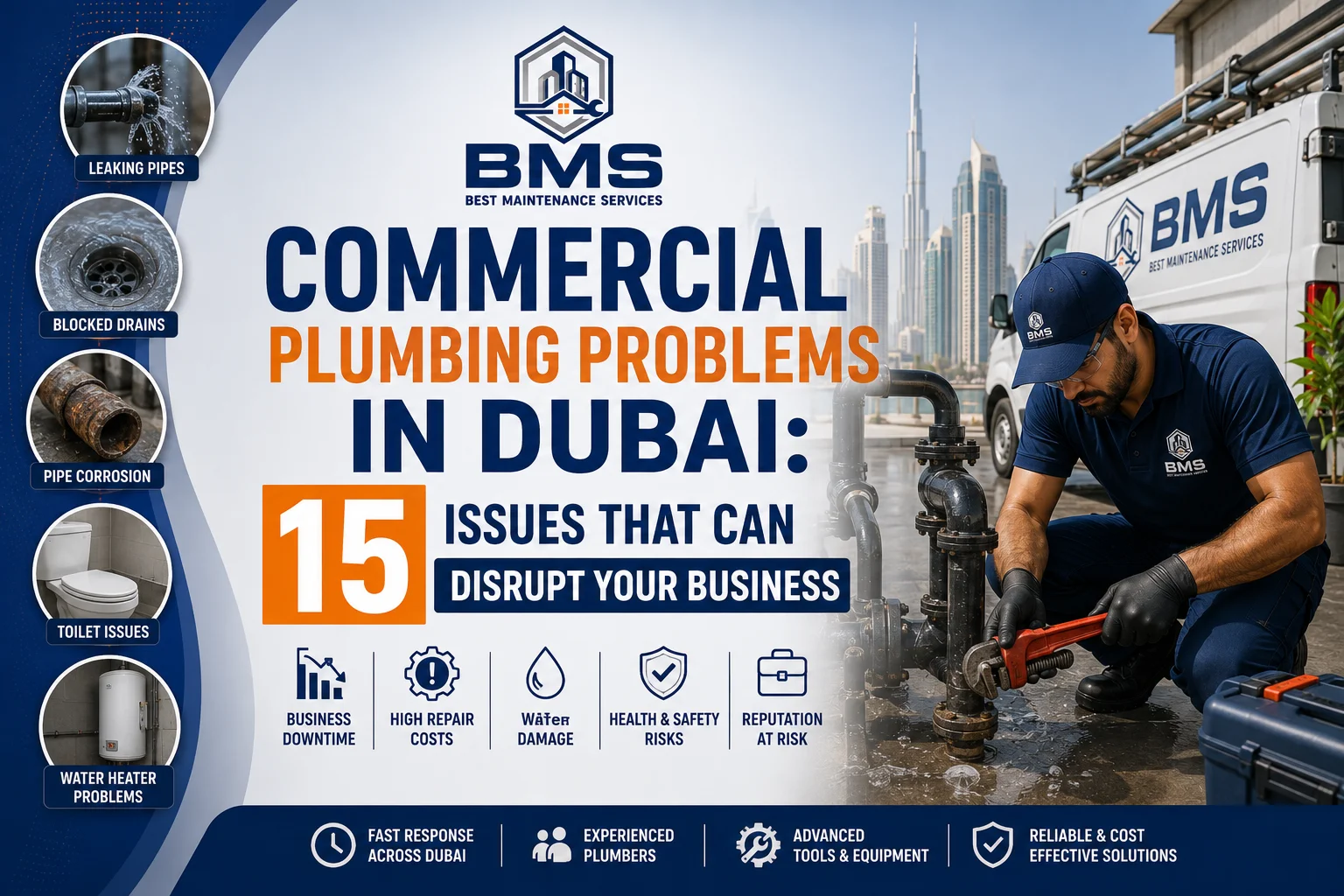
Learn about 15 common commercial plumbing problems in Dubai, including blocked drains, sewer backups, leaks, low water pressure, grease buildup, and pipe damage. Discover warning signs…
Commercial properties in the UAE and mostly in Dubai depend on water and drainage systems every day. A blocked drain, leaking pipe, weak water pressure, or sewer backup can rapidly move from a small maintenance issue to a business problem. In a restaurant, for example, a drainage fault can affect kitchen hygiene and normal service; in an office or hotel, a leak can damage finishes, disrupt rooms, and create complaints.
The right response is not simply to clear the symptom. The useful approach is to identify what is happening, find the likely cause, choose the least disruptive repair method, and then prevent the same fault from returning. That may involve a fixture repair, CCTV pipe inspection, hydro jetting, drain cleaning, leak detection, sewer-line work, or a planned maintenance schedule.
This guide explains 15 common commercial plumbing problems in Dubai, what causes them, the warning signs to watch for, and when professional help makes sense. You’ll also learn how regular maintenance can reduce repeat problems and what to consider when choosing a commercial plumbing company.
For related maintenance support, see Plumbing Services in Dubai and Drain Cleaning Services Dubai. These pages are useful when a recurring blockage or plumbing fault needs a closer site assessment.
Why Plumbing Problems Can Be Serious for Commercial Properties
Business operations can be interrupted
A commercial plumbing fault can affect the part of a building that people use most. A blocked kitchen drain may slow food preparation, while a failed toilet or leak can make part of a property difficult to use. For facility managers, the practical goal is to restore service while protecting the rest of the site from secondary damage.
Water and drainage problems can affect hygiene
Clean water, effective drainage, and good sanitation are closely connected. UAE food-safety legislation places responsibility on food businesses to protect food safety, while Dubai Municipality provides requirements and guidance for food establishments and grease-trap management. That makes drainage maintenance a useful part of a wider hygiene program, not a separate task that can be ignored.
Small plumbing issues can become expensive repairs
A slow drain is easy to ignore because water still moves. The problem is that recurring slow flow can point to buildup deeper in the line. Finding and correcting the cause early is usually more practical than waiting for an overflow, damaged pipe, or emergency shutdown.
Some problems affect multiple areas of a building
Commercial plumbing is a connected network. A restriction in a shared line can affect several fixtures, floors, or tenant spaces. When more than one fixture develops the same symptom, the fault may be upstream rather than inside the fixture itself.
15 Common Commercial Plumbing Problems in Dubai
1. Blocked Drains
Blocked drains are among the easiest faults to notice and one of the most disruptive in busy premises. Kitchen sinks, floor drains, washrooms, and shared drainage lines can collect grease, food debris, hair, sediment, or other material. If water begins to stand around a floor drain, treat it as a warning rather than waiting for a full backup.
2. Slow-Draining Sinks and Fixtures
Slow drainage often means the opening is only partly restricted. In a commercial kitchen, grease buildup in pipes can narrow the available flow path. Repeated slow drainage after basic cleaning suggests that the blockage may be deeper in the line.
3. Sewer Line Blockages
A sewer-line blockage can produce several symptoms at once: multiple slow fixtures, gurgling sounds, sewage odor, or wastewater returning through a lower drain. A blockage in a main line needs a different response from a local sink clog because more of the building may be affected.
4. Recurring Drain Backups
When a drain keeps blocking after cleaning, the first job is to question why. Grease, scale, a damaged pipe, root intrusion, poor slope, or a restriction farther along the line can cause a repeat failure. A CCTV drain inspection can help locate a hidden problem before unnecessary repair work is carried out.
5. Water Leaks Behind Walls or Ceilings
Not every leak is visible at the pipe. Damp marks, bubbling paint, a musty smell, or a ceiling stain can indicate concealed water. Hidden leaks should be investigated early because water can travel through building materials before the original source is obvious.
6. Burst or Damaged Pipes
A burst pipe needs immediate attention because the priority is to stop the water and limit damage. Causes vary from physical damage and corrosion to pressure problems and age. After isolation, the affected section should be assessed so the repair addresses the actual failure point.
7. Low Water Pressure
Low or inconsistent pressure can come from a restricted pipe, a faulty valve, an issue with the building supply, a leak, or demand changes. If the pressure problem affects several fixtures at once, it is worth checking the wider water-supply system instead of replacing one tap or shower head.
8. Running or Leaking Toilets
A toilet that never fully stops running wastes water and can also hide a worn valve, seal, or flush component. Leaking fixtures are small failures, but in hotels, offices, restaurants, and public facilities there may be many fixtures operating every day. Routine inspection can catch these faults before they become repeated service calls.
9. Overflowing Floor Drains
Floor drains are designed to move water away from wet areas, so an overflow often means the downstream drainage path is restricted or the drain is receiving more water than it can discharge. This is especially important in commercial kitchens, wash areas, and service zones where standing wastewater creates a hygiene and slip risk.
10. Bad Odors From Drains
A bad drain smell is not always a cleaning issue. Odors can come from organic buildup, grease, a dry or faulty trap, poor venting, or a sewer connection problem. The smell may disappear temporarily after surface cleaning and then return because the underlying cause has not been corrected.
11. Grease Buildup in Commercial Kitchen Pipes
Restaurants and other food businesses put more fats, oils, and grease into drainage systems than most offices. Once grease cools and sticks to pipe walls, the passage can become narrower. Dubai Municipality specifically regulates food-oil and grease producers and requires dedicated traps for separating grease and oil from sewage discharges.
12. Grease Trap Problems
A Grease Trap Supply & Installation Services cannot do its job effectively when it is overfilled, poorly maintained, damaged, or incorrectly connected. Overflowing traps and heavy buildup can contribute to odor, slow drainage, and blockages. Dubai Municipality guidance covers grease-trap maintenance, cleaning, collection, transport, and the protection of the sewage network from blockages. [3]
13. Corroded or Damaged Pipes
Pipe deterioration can reduce flow and create leaks. Warning signs include repeated repairs, staining near pipe routes, unusual smells, visible corrosion, and recurring blockages in the same section. The correct solution depends on pipe material, condition, location, accessibility, and the extent of damage; repair is not always better than replacement.
14. Water Heater and Hot Water Problems
In hospitality, food service, and commercial wash areas, hot water is part of daily operations. Inconsistent temperature, leaks, poor recovery, or a faulty control can quickly become a service problem. Diagnosis should include the heater, valves, pipework, and demand rather than replacing a component without checking the system.
15. Repeated Plumbing Emergencies
Repeated emergency callouts are often a sign of an unresolved root cause. If a property has the same blockage, leak, or overflow several times, record when it happens, where it happens, and what was done previously. This service history gives a professional a better starting point for diagnosis and can support a preventive plan.
What Causes Commercial Plumbing Problems in Dubai?
Heavy daily water usage
Commercial fixtures may operate for long periods and serve many more people than a typical home system.
Grease, food waste and other buildup
Kitchen drains are exposed to grease, food residues, detergent, sediment, and cleaning water.
Aging or damaged pipework
Older or deteriorated sections are more likely to leak, restrict flow, or fail.
Poor drainage design or installation
Incorrect pipe sizing, poor slopes, awkward routing, or weak access can make maintenance harder.
Foreign objects entering drainage systems
Items that should not enter sinks, toilets, or floor drains can cause sudden obstruction.
Lack of routine plumbing maintenance
Without inspection and cleaning, small changes in flow or leakage can go unnoticed.
High-demand commercial kitchen operations
Frequent washing, cooking, food preparation, and grease production put extra pressure on drainage systems.
Delayed repairs
Waiting until a small leak or slow drain becomes an emergency usually increases disruption.
Warning Signs Your Business Has a Plumbing Problem
The earlier a plumbing problem is noticed, the more options you usually have. Watch for changes that repeat or affect more than one fixture:
- Drains are becoming slower than normal.
- Two or more fixtures develop similar drainage problems.
- Pipes make unusual gurgling, banging, or whistling sounds.
- Water pressure suddenly changes.
- There is a persistent sewage smell or musty odor.
- Water appears where it should not, including walls, ceilings, or floors.
- The same blockage or overflow returns after cleaning.
- Your water bill rises without an obvious operational reason.
How Commercial Plumbing Problems Can Affect Your Business
Business downtime: A blocked kitchen or failed washroom can interrupt normal operations.
Property and equipment damage: Leaks can affect ceilings, floors, cabinets, equipment, and stored materials.
Hygiene concerns: Standing wastewater and sewage-related faults should be dealt with promptly in occupied or food-service areas.
Customer complaints: Odor, poor washroom availability, or visible water damage can affect the customer experience.
Staff safety issues: Wet floors and uncontrolled leaks can create slip and access hazards.
Higher emergency repair costs: Emergency work often carries more disruption than planned maintenance.
Damage to floors, walls and ceilings: Water can travel beyond the visible leak and cause secondary damage.
When Should You Call a Commercial Plumbing Professional?
Professional help is appropriate when the problem is persistent, affects several fixtures, creates water damage, involves sewage, or is stopping business activity. Call promptly when:
- Water is leaking continuously or cannot be isolated safely.
- A drain repeatedly blocks despite cleaning.
- Several fixtures stop draining at the same time.
- Sewage backs up into occupied areas.
- Water pressure suddenly drops across several fixtures.
- The source of a leak cannot be identified.
- A plumbing fault is affecting food preparation, customer areas, rooms, tenants, or normal operations.
How Commercial Plumbing Problems Are Diagnosed
Initial inspection and problem assessment
Confirm the symptoms, affected areas, operating conditions, and previous repair history.
Checking fixtures and accessible pipework
Look at valves, traps, connections, visible leaks, and fixture performance.
Drain and sewer line inspection
Check flow, access points, and whether the restriction appears local or shared.
CCTV inspection for hidden drainage problems
A camera can help identify blockages, buildup, cracks, displaced joints, and other hidden line conditions without unnecessary opening-up work.
Identifying leaks and damaged pipe sections
Use the available evidence to narrow the likely source before deciding on repair.
Choosing the appropriate repair or cleaning method
Select drain cleaning, hydro jetting, repair, replacement, or another method based on the diagnosis rather than using the same method for every problem.
How to Prevent Plumbing Problems in a Commercial Property
Schedule routine plumbing inspections
Review fixtures, supply lines, drains, access points, and known problem areas before they fail.
Keep commercial drains clean
Use a cleaning frequency based on traffic, usage, and actual buildup rather than waiting for a blockage.
Manage grease and food waste properly
Keep FOG and solid food waste out of drainage lines and follow applicable grease-trap requirements.
Maintain grease traps
Inspect, clean, and document grease-trap work based on the kitchen’s operating conditions and Dubai Municipality requirements.
Address small leaks early
Repair dripping valves, fittings, toilets, and accessible pipework before the problem grows.
Monitor water pressure
Unexpected pressure changes can be useful warning signs of a system problem.
Keep drainage access points clear
Accessible cleanouts make inspection and maintenance easier.
Train staff on proper waste disposal
Simple staff rules can reduce foreign-object and food-waste blockages.
Keep records of recurring plumbing issues
Record the date, location, symptom, remedy, and any recommendation so patterns become visible.
Commercial Plumbing Maintenance Checklist
Use this as a practical starting point. Exact frequencies should be adjusted to the property, tenant mix, kitchen output, drainage layout, and previous service history.
| Timing | What to check | What to record |
| Daily | Visible leaks, standing water, unusual odors, blocked sinks or toilets | Location and immediate action |
| Weekly | Slow drains, floor-drain condition, grease-trap symptoms, pressure changes | Recurring areas and symptoms |
| Monthly | Accessible pipework, valves, fixtures, drain access points, maintenance history | Condition and follow-up items |
| Periodic professional inspections | Drainage lines, sewer lines, hidden leaks, grease-trap condition, recurring faults | Inspection findings and repair recommendations |
Which Commercial Properties Need Regular Plumbing Maintenance?
Restaurants and commercial kitchens
High wastewater volume, food residue, grease, and frequent washing make drainage care important.
Hotels and hospitality properties
Multiple guest rooms and back-of-house areas mean one plumbing fault can affect several spaces.
Office buildings
Washrooms, pantry sinks, water supply lines, and shared drainage systems still need routine attention.
Retail and shopping properties
Public washrooms and tenant spaces can create repeated service demand.
Warehouses and industrial facilities
Long pipe runs, staff facilities, process water, and mixed-use areas require a clear inspection plan.
Residential and mixed-use buildings
Shared risers, common drains, and tenant fixtures can allow one fault to spread across areas.
Properties managed by facility teams
A documented maintenance program helps track recurring problems and plan service before emergencies.
Commercial Plumbing Repairs vs Preventive Maintenance
Reactive repair focuses on restoring service after something fails. Preventive maintenance focuses on finding conditions that are likely to cause failure. Both have a place, but a property with repeated blockages, leaks, or emergency callouts is often a good candidate for a more structured maintenance plan.
| Approach | Best used for | Main benefit |
| Reactive repair | Active leaks, blockages, failures, overflows | Restores service |
| Preventive maintenance | Recurring risks and planned servicing | Reduces avoidable disruption |
| Condition-based inspection | Unknown or hidden problems | Targets the real fault before repair |
A maintenance contract may make sense when a property has frequent plumbing use, multiple drainage points, commercial kitchen activity, or a history of repeat emergencies. The right scope should be based on the site rather than a generic package.
How to Choose a Commercial Plumbing Service in Dubai
Look for experience with commercial properties
Commercial sites have different access, operating, hygiene, and coordination requirements than a simple residential repair.
Check whether the company handles both plumbing and drainage
A business may need fixture repair today and drain or sewer-line support tomorrow.
Ask how problems are diagnosed
A good provider should explain what was found and why a particular method is recommended.
Confirm the equipment and methods used
For complex drainage issues, ask whether the team can use appropriate inspection or cleaning equipment.
Request clear pricing and scope of work
The quote should explain what is included, what is excluded, and whether additional work needs approval.
Consider response time and ongoing support
For businesses, communication and predictable follow-up matter as much as technical work.
Check reviews and relevant project experience
Look for evidence that the provider regularly works with kitchens, restaurants, hotels, offices, buildings, or managed facilities.
For a practical price reference, Best Maintenance Services currently lists drain-cleaning support from AED 300 onward on its website. That is a starting service figure, not a universal Dubai market rate: the final cost depends on the blockage, access, inspection needs, equipment, urgency, and scope of work. [4]
Why Choose Best Maintenance Services
Best Maintenance Services supports Dubai properties with plumbing, drainage, drain cleaning, grease-trap supply and installation, and commercial kitchen maintenance. Its current business record shows 15,000+ service jobs completed, 1,500+ kitchens and commercial sites supported, 600+ restaurants and businesses served, and coverage across all 7 UAE emirates. It also reports a 4.9/5 service rating based on 500+ customer reviews.
For a customer, the useful part of these numbers is not the numbers alone. What matters is whether the team can explain the fault, use suitable equipment, communicate the scope clearly, and recommend a practical next step. BMS also appears on Fixpert Solutions, a UAE service directory, where its grease-trap supply and installation service is listed.
The company website identifies Dubai-based contact support in Al Qusais and highlights drain cleaning, hydro jetting, CCTV inspection, sewer-line cleaning, and commercial drainage support. Service availability, price, and scope should always be confirmed for the specific site before work begins.
Frequently Asked Questions About Commercial Plumbing Problems
What are the most common commercial plumbing problems in Dubai?
Common issues include blocked drains, slow drainage, sewer-line blockages, recurring backups, hidden leaks, burst or damaged pipes, low water pressure, leaking toilets, overflowing floor drains, bad odors, grease buildup, grease-trap problems, pipe corrosion, hot-water faults, and repeated emergencies.
What causes commercial drains to keep blocking?
Grease, food waste, sediment, scale, foreign objects, damaged pipes, poor drainage design, and deeper restrictions can all contribute. When the blockage returns after cleaning, the underlying cause should be investigated.
How often should a commercial property have its plumbing inspected?
There is no single schedule that fits every property. Frequency should reflect building size, usage, kitchen activity, drainage design, age, previous failures, and risk. High-use commercial kitchens often need closer monitoring than a small office.
Why does my commercial kitchen drain keep backing up?
Frequent kitchen backups are often linked to grease and food residues, a restricted downstream line, a poorly maintained grease trap, or a damaged section of pipe. A professional assessment can determine where the restriction is and what method is appropriate.
How do I know if a sewer line is blocked?
Multiple slow fixtures, gurgling, sewage odor, wastewater returning through a low drain, or repeated backups can indicate a sewer-line problem. Several affected fixtures at once are especially important clues.
When does a plumbing problem require CCTV inspection?
CCTV inspection is useful when a drainage problem keeps returning, the blockage location is uncertain, several access points are affected, or the team needs to check the internal condition of a pipe before recommending repair.
How can businesses prevent plumbing emergencies?
Use routine inspections, keep drains and grease traps maintained, control food waste, repair small leaks quickly, train staff on proper disposal, and keep a clear history of recurring faults.
How much does commercial plumbing repair cost in Dubai?
There is no reliable single price because scope varies widely. Cost can change with the fault, access, labor, equipment, inspection requirements, urgency, and whether repair or replacement is needed. Ask for a clear scope before approving work.
Should businesses schedule preventive plumbing maintenance?
Yes, especially when plumbing faults can affect food service, guest rooms, customer areas, tenants, or daily operations. Planned maintenance is particularly useful for properties with recurring problems or high drainage demand.
Final Thoughts: Fix Small Plumbing Problems Before They Disrupt Your Business
The safest way to manage commercial plumbing is to treat early warning signs as useful information. A slow drain, unusual odor, pressure change, damp patch, or repeat blockage can tell you that the system needs attention before the issue becomes a costly emergency.
The practical sequence is simple: identify the problem, find the likely cause, use the right diagnostic or cleaning method, complete the repair properly, and then add preventive steps where they make sense. That approach helps restaurants, hotels, offices, property managers, and facility teams protect daily operations without turning every small issue into a major project.
Best Maintenance Services provides plumbing and drainage support in Dubai, including drain cleaning, CCTV inspection, hydro jetting, sewer-line cleaning, grease-trap sizing, supply, installation and replacement, and related commercial maintenance. For a site-specific recommendation, ask for an inspection and a clear scope of work before approving the repair.
Need Commercial Plumbing Help in Dubai?
Best Maintenance Services | Dubai | Call/WhatsApp: +971 52 243-1336 | Get a Service Quote
Need a quote or technical guidance?
Share your emirate, property or business type, relevant photos, site access details and preferred timing. BMS will confirm the appropriate next step.