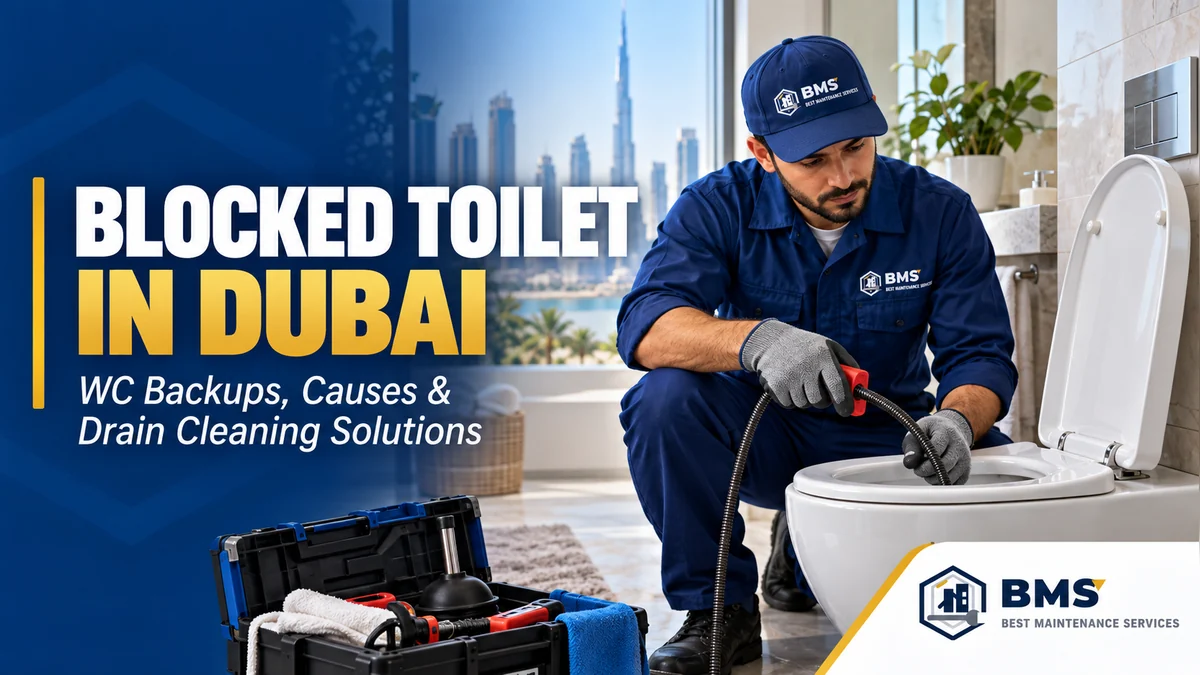
A blocked toilet can be a local WC obstruction or a deeper drainage problem. Learn the warning signs, safe first steps and when professional drain cleaning is needed.
A blocked toilet in Dubai can be a simple local WC obstruction, but it can also be the first visible sign of a deeper drain or sewer problem. The most important distinction is whether the blockage affects only one toilet or whether other fixtures are also draining slowly, gurgling or backing up. That pattern determines whether the correct next step is local toilet unblocking, branch-drain cleaning or a wider drainage assessment.
BMS provides drain cleaning services in Dubai for toilets, bathroom drains, floor drains, kitchen drains and deeper drainage lines. This guide explains what you can check safely, what not to do, and when the symptoms point beyond the toilet itself.
Quick answer: why does a toilet become blocked?
Common causes include too much toilet paper, wet wipes, sanitary products, foreign objects, restricted toilet traps, buildup in the connecting branch, or a blockage further down the drainage system. If the same toilet keeps blocking after it has been cleared, the cause may be deeper than the bowl and should be investigated rather than repeatedly treated at the fixture.
Signs the blockage is probably local to one toilet
- The affected toilet drains slowly but nearby sinks and showers are normal.
- The bowl rises after flushing and then drops gradually.
- The problem began immediately after an object or excessive paper was flushed.
- No other floor drain or toilet is gurgling or backing up.
A local blockage may sit inside the WC trap or shortly after the toilet connection. Even then, repeated aggressive plunging or chemical treatment can make the situation worse if a hard object is involved.
Signs the problem may be in the main drain or sewer line
If several fixtures are affected, the toilet is no longer the only useful diagnostic point. Warning signs include water rising in a floor drain when the toilet is flushed, several toilets becoming slow at the same time, wastewater returning through the lowest drain point, or gurgling sounds from other fixtures.
These symptoms can indicate a restriction downstream from several fixtures. Our guide to blocked sewer-line signs in Dubai explains this pattern in more detail.
Why wet wipes are a major toilet blockage risk
Many wipes remain strong in water for much longer than toilet paper. They can catch on rough pipe surfaces, combine with other waste and create a dense obstruction. Products marketed as flushable do not necessarily behave like toilet paper inside every real drainage system. The safest household rule is to flush only normal toilet waste and appropriate toilet paper.
Foreign objects and hard obstructions
Small toys, cleaning items, packaging, sanitary products and other objects can lodge inside the toilet trap. If a hard object is suspected, pushing it deeper with improvised tools can convert an accessible blockage into a more difficult branch-line problem. Tell the technician what may have entered the toilet; that information changes the clearing method.
What to do when the bowl is rising
Do not keep flushing. A second or third flush can turn a contained blockage into an overflow. Stop using the toilet, keep children and unnecessary traffic away from the area, and protect nearby finishes if the bowl is close to overflowing. If wastewater has already escaped onto the floor, treat the area as contaminated and avoid direct contact.
Can you use a plunger?
A suitable toilet plunger can be reasonable for a simple soft blockage when there is no reason to suspect a hard object or deeper sewer restriction. Use controlled pressure rather than violent force. Stop if water begins appearing from another drain, the blockage repeatedly returns, or the toilet does not improve after a reasonable attempt.
Why chemical drain cleaners are usually a poor toilet strategy
Strong chemicals may not remove wipes, sanitary products or solid objects. They can remain trapped in the bowl or line and create a chemical exposure risk for the technician who later opens the system. They can also be unsuitable for certain materials or seals. Mechanical diagnosis and the correct clearing method are generally more controlled.
How professionals clear a blocked toilet
The method depends on the blockage position and cause. A technician may start with fixture-level tools, then move to mechanical drain-cleaning equipment if the obstruction is in the branch. If repeated blockages or multiple-fixture symptoms suggest a deeper problem, CCTV drain inspection can help identify buildup, damage, roots, displaced joints or other causes.
For dense deposits deeper in suitable pipework, hydro jetting may be recommended after the route and pipe condition are understood. BMS compares cleaning methods in its drain-cleaning methods guide.
Blocked toilet in an apartment
In apartments, the toilet connects into a wider building drainage system. If only your toilet is affected, the problem may remain inside the unit. If several fixtures in the unit or neighbouring units are affected, facilities management may need to coordinate because the restriction can be in a shared stack or downstream line.
Tell BMS whether the property is an apartment and whether building management has reported a common issue. This prevents unnecessary fixture work when the obstruction sits outside the unit.
Blocked toilet in a villa
Villas can have multiple bathrooms, long branch lines, external chambers and ground-level drainage routes. If one upstairs toilet is blocked but all other fixtures are normal, the issue may be local. If several bathrooms or external chambers show slow flow, the diagnosis should consider the wider property drainage network.
What affects the cost of toilet unblocking?
The price depends on scope rather than the word “toilet.” A simple local obstruction is different from a deep branch blockage, main-line cleaning, CCTV inspection or hydro jetting. Access, overflow risk, night work, pipe condition and the number of affected fixtures can also change the job.
BMS currently publishes simple localized drain cleaning from AED 300 on its drain service page, with the final price confirmed according to the actual blockage type, access and method required. A responsible quotation should therefore follow the diagnosis rather than assume every WC blockage is identical.
Why does the same toilet keep blocking?
Repeated blockage is a signal to stop treating the event as random. Possible causes include an object that was never fully removed, restricted branch pipework, poor flow, buildup further downstream, damaged pipework or a recurring usage issue. The BMS article why drains keep blocking after cleaning covers the deeper causes.
When toilet blockage is an emergency
Arrange faster assistance when wastewater is already overflowing, several fixtures are backing up, the lowest floor drain is returning sewage, the blockage affects a commercial or high-occupancy property, or there is no usable toilet available. Stop adding water to the affected system while waiting for assessment.
How to reduce future toilet blockages
- Flush only normal toilet waste and toilet paper.
- Keep wipes, sanitary products and cleaning items out of the WC.
- Use bins in bathrooms so non-flushable waste has an obvious destination.
- Respond to slow flushing before the toilet becomes fully blocked.
- Investigate repeated blockages rather than treating each one as unrelated.
Blocked toilet diagnosis by symptom
| Symptom | Likely direction | Best next step |
|---|---|---|
| Bowl rises then slowly falls | Local or short-branch restriction | Stop flushing and assess locally |
| Bowl rises and floor drain reacts | Shared downstream restriction | Deeper drain assessment |
| Only one WC affected after an object was flushed | Fixture/trap obstruction | Object-aware clearing method |
| Several toilets are slow | Main branch or sewer issue | Property-wide diagnosis |
| Blockage keeps returning | Underlying restriction or damage | Consider CCTV inspection |
What a proper WC blockage service should include
The technician should first confirm whether the problem is local or part of a wider drainage restriction. The service should avoid unnecessary force, protect nearby bathroom finishes, use equipment appropriate to the route and confirm that normal flow has returned before leaving. If the blockage pattern suggests a deeper issue, the customer should be told why additional cleaning or inspection is recommended rather than receiving repeated temporary clearing.
Toilet blockages in rented and managed properties
Tenants should report repeated blockages early, especially when more than one fixture reacts or wastewater appears outside the toilet. Property managers should keep a record of recurrence by unit and fixture. If several incidents happen on the same branch or stack, that history can justify a wider drainage inspection instead of treating each event as an isolated tenant problem.
What to send before requesting service
Share a photo of the toilet, explain whether the water level is high or simply slow, state whether another sink, shower or floor drain is affected, and mention any object that may have been flushed. In villas, note whether the problem is on one floor or several. In apartments, mention whether facilities management has reported a shared issue. This information helps BMS prepare the correct equipment and reduces diagnostic time.
When a toilet blockage affects hygiene and property damage risk
Once wastewater reaches the bathroom floor, the issue is no longer only about restoring flow. Contaminated water can spread into grout lines, floor joints and nearby finishes. Stop using connected fixtures where possible, keep the area isolated, and arrange cleaning after the blockage is controlled. In commercial or shared washrooms, the affected cubicle may need to be taken out of service until it is safe to use again.
Commercial note: In restaurants, offices, schools and other high-traffic sites, one unusable toilet can quickly affect operations. If several washrooms share the same drainage route, report all symptoms together so the technician can assess the system rather than only the first blocked cubicle.
When to call BMS
Contact BMS when the toilet remains blocked after a safe basic attempt, the bowl repeatedly rises, more than one fixture is affected, wastewater is backing up, or the blockage keeps returning. Share the property type, affected toilet, whether other drains are slow, and any known object that may have been flushed. That information helps BMS select the correct local-unblocking or deeper drain-cleaning route.
Need a quote or technical guidance?
Share your emirate, property or business type, relevant photos, site access details and preferred timing. BMS will confirm the appropriate next step.
Frequently Asked Questions
Should I keep flushing a blocked toilet?
No. If the bowl is rising or draining slowly, repeated flushing can cause overflow.
Can a blocked toilet mean the main sewer is blocked?
Yes. If several fixtures are affected, floor drains back up or other toilets gurgle, the restriction may be deeper in the drainage system.
Does BMS clear WC blockages in Dubai?
BMS provides drain-cleaning support for toilet, bathroom, floor-drain and deeper drainage blockages, with the method selected after the blockage pattern is assessed.